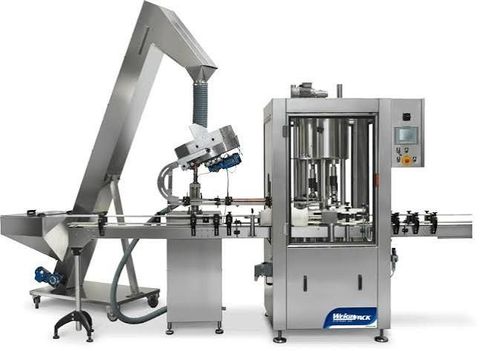
Capsule Polishing Machine: An Overview of Modern Polishing Technology
A capsule polishing machine is equipment used in pharmaceutical manufacturing to clean the outer surfaces of filled capsules and remove loose powder or particles.
Capsule polishing equipment is generally positioned after capsule filling, where capsules may carry traces of powder from the filling process. The polishing stage helps prepare capsules for subsequent inspection, packaging, or other processing steps.
A pharmaceutical capsule polishing machine typically combines mechanical movement with controlled contact surfaces, brushes, or air-assisted mechanisms. Depending on its design, the equipment can perform polishing, dedusting, and surface cleaning within one processing stage. A capsule polisher machine may be operated as a standalone unit or integrated with other pharmaceutical capsule processing equipment.
The development of capsule polishing technology is connected to the increasing use of automated equipment in pharmaceutical production. As capsule filling became more mechanized, manufacturers needed consistent methods for handling filled capsules and removing residual material from their external surfaces.
How Capsule Polishing Works
The basic process involves feeding filled capsules into the polishing area. The capsules move through a controlled path where rotating components, brushes, or other contact mechanisms remove loose powder from the exterior.
Some systems also use suction or air movement to separate removed particles. A capsule cleaning and polishing machine may therefore combine several functions, depending on its configuration.
The general sequence can include:
- Feeding filled capsules into the equipment.
- Moving capsules through a polishing or brushing section.
- Removing loose powder and surface particles.
- Collecting removed material through a controlled extraction system.
- Transferring cleaned capsules to the next processing stage.
Main Types of Equipment
Different designs are used according to production requirements. An automatic capsule polishing machine can continuously process capsules with limited manual handling, while a smaller capsule polisher machine may be designed for lower-throughput environments.
A high speed capsule polishing machine is generally designed around continuous capsule movement and automated feeding. An industrial capsule polishing machine may incorporate larger processing capacity, integrated controls, and connections to other production equipment.
A capsule dedusting and polishing machine focuses specifically on removing loose powder while polishing the capsule surface. A capsule finishing machine can refer more broadly to equipment used during final handling stages.
Importance
Capsule polishing is an important part of capsule handling because residual powder can remain on the outside of filled capsules after filling. Removing this material can improve the visual cleanliness of capsules and support subsequent inspection and packaging processes.
The equipment is particularly relevant to pharmaceutical production environments where processes need to be documented and controlled. A pharmaceutical capsule polishing machine can be integrated into a production line so that capsule movement follows a defined sequence.
Supporting Clean Handling
Capsule cleaning equipment helps address powder accumulation around filled capsules. Without an appropriate cleaning stage, loose material may remain on capsule surfaces or around processing equipment.
A capsule cleaning and polishing machine can combine mechanical cleaning with particle extraction. The actual cleaning method depends on capsule materials, formulation characteristics, equipment configuration, and operating parameters.
Integration With Production Lines
Modern automated capsule polishing systems can connect with capsule filling machines, inspection equipment, conveyors, and packaging processes. This reduces the need to manually transfer capsules between separate stages.
An automated pharmaceutical capsule processing system may therefore include filling, polishing, inspection, sorting, and packaging as interconnected stages. The degree of integration varies between production environments.
Factors That Affect Equipment Selection
Several technical factors influence how a capsule polishing system is configured. These can include capsule dimensions, production volume, powder characteristics, cleaning requirements, available floor space, and compatibility with surrounding equipment.
| Factor | What It Relates To |
|---|---|
| Capsule size | Compatibility with capsule dimensions |
| Processing rate | Number of capsules handled over a given period |
| Dedusting method | Mechanical or air-assisted particle removal |
| Extraction | Collection of removed powder and particles |
| Automation | Level of automatic feeding and transfer |
| Cleaning access | Ease of inspection and equipment cleaning |
| Integration | Connection with filling and downstream systems |
The term capsule polishing machine price may appear in equipment research, but pricing depends on specifications, automation level, materials, capacity, configuration, and additional components. A single figure cannot accurately represent every machine configuration.
Recent Updates
From 2024 through 2026, capsule polishing technology has continued to follow broader pharmaceutical manufacturing trends toward automation, improved process monitoring, easier cleaning, and greater equipment integration. Rather than representing a single technological change, these developments reflect the wider movement toward connected production environments.
Automation and Process Integration
Automatic capsule polisher systems increasingly form part of integrated production lines rather than operating as isolated machines. Equipment may communicate with upstream and downstream systems to coordinate capsule movement and processing.
Advanced capsule polishing systems can also incorporate sensors and electronic controls for monitoring operating conditions. These features can support process documentation and help operators identify abnormal operating conditions.
Hygiene and GMP-Oriented Design
A GMP capsule polishing machine is designed with manufacturing practices that emphasize controlled handling, cleanable surfaces, appropriate materials, and documented procedures. Specific requirements depend on the facility, product, jurisdiction, and applicable pharmaceutical regulations.
Pharmaceutical capsule polishing equipment may therefore use stainless-steel construction and accessible surfaces in areas where cleaning and inspection are important. The precise design should correspond with the requirements applicable to the manufacturing environment.
Greater Use of Automated Inspection
Polishing equipment can increasingly be located near inspection technologies that examine capsule appearance or identify physical abnormalities. Automated inspection may use cameras, sensors, or other detection methods.
This development connects polishing with broader pharmaceutical capsule cleaning equipment and inspection workflows. The goal is to create a more continuous sequence from capsule filling through downstream handling.
Digital Monitoring
Modern pharmaceutical equipment increasingly incorporates electronic controls and data interfaces. These systems can record operating information, display equipment conditions, and support process monitoring.
For an automated pharmaceutical capsule processing system, digital monitoring can help coordinate multiple stages. However, electronic monitoring does not replace physical inspection, cleaning procedures, maintenance, or appropriate process controls.
Tools and Resources
Several resources can help readers understand capsule polishing technology and its role in pharmaceutical manufacturing. Equipment manuals, technical specifications, pharmaceutical manufacturing guidance, and regulatory documentation can provide information about operating principles and applicable requirements.
Equipment Documentation
Technical documentation for capsule polishing equipment can explain:
- Compatible capsule sizes and materials.
- Recommended operating parameters.
- Cleaning and inspection procedures.
- Electrical and mechanical requirements.
- Connections with other production equipment.
- Maintenance and replacement components.
These documents are particularly useful when evaluating whether a capsule polishing system can fit within an existing production workflow.
Regulatory and Technical Resources
Regulatory organizations and pharmaceutical standards bodies publish guidance related to manufacturing practices, equipment hygiene, documentation, and process control. These resources can help explain the principles behind GMP-oriented equipment design.
Technical drawings, process flow templates, equipment checklists, and maintenance records can also help document how a polishing stage fits into a wider manufacturing process.
Process Evaluation Tools
Manufacturers may use process maps and equipment qualification documentation to understand how capsules move through each production stage. A process map can show the relationship between filling, polishing, dedusting, inspection, and packaging.
For high performance capsule polishing equipment, evaluation may consider processing capacity, capsule handling, particle extraction, cleaning access, automation features, and compatibility with existing pharmaceutical capsule processing equipment.
FAQs
What is a capsule polishing machine used for?
A capsule polishing machine is used to remove loose powder and particles from the external surfaces of filled capsules. It may also provide controlled surface polishing before inspection or packaging.
How does an automatic capsule polishing machine work?
An automatic capsule polishing machine generally feeds filled capsules through a controlled polishing section. Brushes, mechanical surfaces, air movement, suction, or combinations of these methods can remove residual powder.
What is the difference between a capsule polisher machine and a capsule dedusting machine?
A capsule polisher machine generally focuses on surface cleaning and polishing, while a capsule dedusting machine emphasizes the removal of loose powder and particles. Some equipment combines both functions in one system.
What is a GMP capsule polishing machine?
A GMP capsule polishing machine is designed around manufacturing practices concerning hygiene, cleanability, controlled operation, and documentation. Its exact requirements depend on the applicable manufacturing standards and facility procedures.
What factors influence capsule polishing machine price?
Capsule polishing machine price can vary according to processing capacity, automation level, construction materials, capsule compatibility, control systems, cleaning features, and integration with other pharmaceutical equipment.
Conclusion
Capsule polishing machines are used to clean and polish filled capsules after the filling stage. Modern equipment can combine polishing, dedusting, particle extraction, automation, and digital monitoring within a broader pharmaceutical production workflow. Recent development has focused on greater integration, controlled handling, cleanable designs, and automated process monitoring. The specific configuration of capsule polishing equipment depends on capsule characteristics, production requirements, applicable manufacturing practices, and surrounding equipment.

Related Post...
Vacuum Pads Guide: Types, Materials, and Industrial Applications
Updated: October 19, 2026
Read More
Weather Instruments Guide: Understanding Tools for Measuring Atmospheric Conditions
Updated: October 19, 2026
Read More