Explore the Working Principles of Electrohydraulic Cylinders
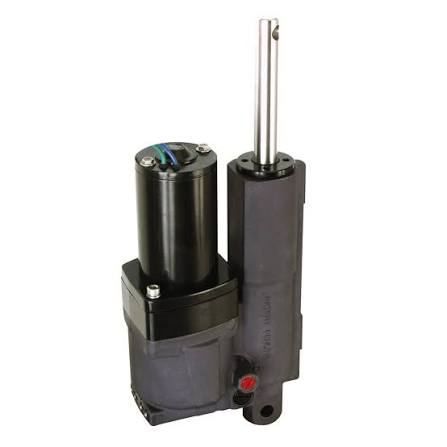
Electrohydraulic cylinders are devices that combine electrical control with hydraulic power to produce linear movement.
They are used in industrial machinery, material handling equipment, manufacturing systems, and applications that require controlled pushing, pulling, lifting, or positioning. Understanding their working principles helps explain how electrical signals and pressurized fluid work together to move heavy loads.
Traditional hydraulic cylinders use pressurized fluid supplied by a separate hydraulic power unit. Electrohydraulic cylinders add electrical components, such as motors, sensors, control units, or integrated pumps, to manage movement. Depending on the design, these components may be installed within a single assembly or connected through separate hydraulic lines and control equipment.
Industrial electrohydraulic actuators are found in environments where mechanical force and controlled movement are both important. Their operation depends on factors such as hydraulic pressure, piston area, fluid flow, actuator design, and the electrical control method.
Main Components and Their Functions
An electrohydraulic cylinder contains several components that work together to create movement.
Cylinder barrel: Contains the hydraulic fluid and provides a chamber for the piston.
Piston and piston rod: Convert hydraulic pressure into linear movement and transfer force to the connected equipment.
Hydraulic pump: Generates fluid flow and pressure within the system.
Electric motor: Drives the pump in integrated designs or powers an associated hydraulic unit.
Valves: Regulate fluid direction, flow, and pressure.
Sensors and controllers: Monitor movement or operating conditions and adjust commands when the system supports closed-loop control.
Seals and connections: Help contain hydraulic fluid and prevent leakage.
Heavy duty electrohydraulic cylinders may use reinforced components and specialized sealing arrangements to handle demanding operating conditions. Their construction depends on the required force, stroke length, working pressure, duty cycle, and surrounding environment.
How Electrohydraulic Cylinders Produce Movement
The operating principle begins when an electrical command activates the motor or control system. A pump then moves hydraulic fluid into the appropriate chamber of the cylinder, creating pressure against the piston.
The piston moves when the resulting hydraulic force overcomes the opposing load and friction. As the piston travels, the attached rod extends or retracts, depending on the arrangement of the cylinder and the direction of fluid flow.
In many hydraulic linear actuator systems, valves control which chamber receives pressurized fluid and which chamber releases fluid. In integrated electrohydraulic designs, the pump and motor may reverse direction or use other control arrangements to change movement.
Importance
Electrohydraulic cylinders are important because industrial equipment often needs substantial linear force alongside controlled movement. Electrical systems provide command and monitoring functions, while hydraulic pressure enables the actuator to move loads that may be difficult to handle with smaller mechanical mechanisms.
These systems can be used in presses, lifting platforms, agricultural machinery, construction equipment, production lines, and industrial positioning equipment. Their design allows them to support a range of operating requirements, although actual performance depends on the complete system rather than the cylinder alone.
Force, Speed, and Position Control
Three operating characteristics are particularly important: force, movement speed, and positioning accuracy.
Force depends mainly on hydraulic pressure and the effective piston area. For an ideal cylinder, the relationship can be expressed as:
Force = Pressure × Effective Piston Area
For example, a pressure of 10 MPa acting on an effective piston area of 0.01 square metres produces an ideal force of 100,000 newtons. Actual output can be lower because of friction, pressure losses, and other operating factors.
Movement speed is influenced by the fluid flow rate and the effective piston area. Positioning accuracy depends on the actuator design, sensor resolution, control method, mechanical load, and operating conditions.
Precision electrohydraulic positioning systems may use position sensors and electronic controllers to compare the measured position with a target position. The controller can then adjust pump operation or valve settings to reduce the difference.
Industrial Applications and Practical Challenges
Electrohydraulic cylinders support a variety of tasks, including lifting heavy equipment, adjusting machinery, positioning industrial components, and applying controlled force during production. Their suitability depends on the required load, movement range, available space, and environmental conditions.
Several practical challenges require attention:
Hydraulic fluid contamination can affect valves, pumps, and seals.
Fluid leaks may reduce performance and create environmental or safety concerns.
Excessive heat can affect fluid properties and component life.
Incorrect pressure settings can create equipment damage or unsafe movement.
Poor sensor calibration can reduce positioning accuracy.
Regular inspection, suitable fluid selection, correct installation, and appropriate pressure protection are important aspects of system operation.
Recent Updates
From 2024 through 2026, developments in electrohydraulic technology have continued to reflect broader industrial trends toward electronic control, condition monitoring, energy awareness, and equipment integration. These changes vary by application and manufacturer, and not every cylinder incorporates the same features.
Electrification and Integrated Designs
Some newer hydraulic actuator designs integrate the electric motor, pump, control electronics, and cylinder into a compact assembly. This arrangement can reduce the need for extensive external hydraulic piping in suitable applications.
Integrated systems may also allow more direct control over pump operation. Depending on the design, reducing unnecessary fluid circulation can improve energy use compared with certain continuously operating hydraulic arrangements.
Sensors and Digital Monitoring
Industrial equipment increasingly uses sensors to measure position, pressure, temperature, and other operating conditions. When connected to a suitable controller, these measurements can help operators identify changes in actuator behavior.
Digital monitoring can also support maintenance planning by recording operating cycles, temperature trends, and other relevant information. However, sensor data must be interpreted in context because a change in a reading does not always indicate a component failure.
Selection and Replacement Considerations
Organizations evaluating electrohydraulic cylinder manufacturers or industrial hydraulic actuator manufacturers generally need to compare technical specifications rather than rely on product descriptions alone. Relevant factors include rated pressure, force, stroke, mounting dimensions, operating temperature, and control compatibility.
Electric hydraulic cylinder suppliers may provide different actuator configurations, while custom electrohydraulic cylinder systems can be designed around specific mechanical and control requirements. Electrohydraulic cylinder replacement units must match the equipment's physical interfaces and operating specifications to avoid compatibility problems.
Tools and Resources
Several technical resources can help explain, calculate, and evaluate electrohydraulic cylinder operation.
Engineering Calculators and Design References
Hydraulic force calculators can estimate theoretical cylinder output using pressure and piston area. Flow-rate and cylinder-speed calculators can help establish approximate extension or retraction times.
Useful resources include:
Hydraulic cylinder force and speed calculators.
Manufacturer technical datasheets and dimensional drawings.
Hydraulic circuit diagrams and component manuals.
Engineering references covering fluid power and pressure control.
Position sensor and controller documentation.
These resources provide a starting point for understanding system requirements. Actual calculations may also need to account for rod-side area, pressure losses, load variation, and the characteristics of the connected hydraulic circuit.
Standards and Maintenance Documentation
Technical publications from organizations such as the International Organization for Standardization (ISO) and the International Fluid Power Society (IFPS) provide background on hydraulic equipment, terminology, and fluid power practices.
Equipment manuals can explain approved operating pressures, inspection intervals, fluid specifications, and safety precautions. Documentation for the complete machine is particularly important because an actuator may depend on external valves, controllers, power units, and mechanical supports.
FAQs
What is an electrohydraulic cylinder?
An electrohydraulic cylinder is a linear actuator that uses electrical control and hydraulic pressure to create movement. Depending on its design, it may contain an integrated motor and pump or operate with a separate hydraulic power unit.
How do industrial electrohydraulic actuators work?
Industrial electrohydraulic actuators receive electrical commands that control fluid movement or pump operation. Pressurized hydraulic fluid acts on a piston, producing linear force that moves the connected load.
What factors matter when selecting heavy duty electrohydraulic cylinders?
Important factors include required force, working pressure, stroke length, movement speed, mounting dimensions, duty cycle, environmental conditions, and control requirements. The cylinder must also be compatible with the machine's hydraulic and electrical systems.
How do precision electrohydraulic positioning systems control movement?
These systems may use sensors to measure the actuator's position and send feedback to an electronic controller. The controller compares the measured position with the target and adjusts the system when necessary.
When are electrohydraulic cylinder replacement units needed?
Replacement units may be required when a cylinder is damaged, worn, or incompatible with a revised machine configuration. Dimensions, pressure ratings, stroke length, mounting arrangements, and control interfaces need to be checked before replacement.
Conclusion
Electrohydraulic cylinders combine electrical control with hydraulic force to produce controlled linear movement. Their operation depends on components such as pumps, motors, pistons, valves, and sensors, with performance influenced by pressure, fluid flow, and system design. Developments in integrated actuators and digital monitoring are expanding the ways these devices can be controlled and observed. Understanding their working principles provides useful background for interpreting their industrial applications, maintenance requirements, and technical specifications.

Related Post...
Weather Instruments Guide: Understanding Tools for Measuring Atmospheric Conditions
Updated: October 19, 2026
Read More
Weight Indicators Guide: Understanding Types, Functions, and Industrial Applications
Updated: October 19, 2026
Read More
Pneumatic Clutches: A Complete Guide to Their Design and Operation
Updated: October 19, 2026
Read More