Industrial Refrigeration Plants: Basics of Cooling Systems and Energy Management
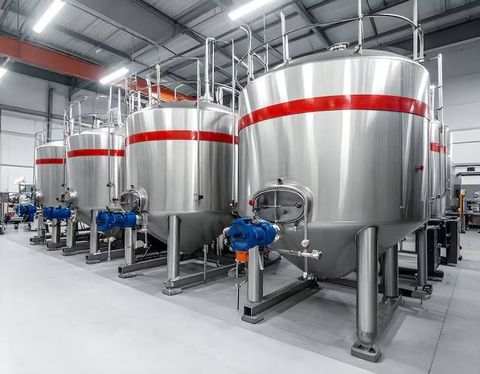
Industrial refrigeration plants are large cooling systems designed to remove heat from manufacturing areas, storage rooms, processing equipment, and other controlled environments.
Unlike household refrigerators, these systems can operate continuously and handle large cooling loads across factories, warehouses, food-processing facilities, chemical plants, and other industrial locations.
The basic purpose of an industrial refrigeration plant is to move heat from one location to another. A refrigerant circulates through equipment such as compressors, condensers, expansion devices, and evaporators. During this cycle, the refrigerant changes pressure and state, allowing it to absorb heat from a cooled area and release that heat elsewhere.
How an Industrial Cooling System Works
A typical refrigeration cycle has four main stages. The compressor raises the pressure of the refrigerant gas. The condenser then removes heat from the refrigerant, causing it to change into a liquid. An expansion device reduces its pressure, while the evaporator allows the refrigerant to absorb heat from the area or process being cooled.
Industrial refrigeration plants may use different system arrangements depending on temperature requirements, plant size, operating conditions, and the process involved. Ammonia, carbon dioxide, and various synthetic refrigerants are among the substances used in refrigeration applications.
The cooling requirement can also vary considerably. A cold-storage warehouse may need stable low temperatures, while a food-processing plant may require rapid cooling during specific production stages. This means the refrigeration system must be matched to the actual heat load rather than operated according to a single fixed setting.
Importance
Industrial refrigeration affects several parts of modern life, even when people do not directly see the equipment. Temperature-controlled systems help preserve food, maintain materials, support manufacturing processes, and protect products that can be damaged by excessive heat.
Energy management is particularly important because refrigeration plants can operate for long periods. Electricity is commonly used by compressors, pumps, fans, controls, and other components. Poor control settings, excessive heat gain, blocked airflow, refrigerant problems, or inefficient equipment can increase energy consumption.
Main Factors That Influence Energy Use
Several factors can influence the energy performance of industrial refrigeration plants:
- Temperature settings: Lower temperature requirements generally increase the amount of work the refrigeration system must perform.
- Compressor operation: Compressor loading, sequencing, and pressure settings influence overall system performance.
- Condenser conditions: Outdoor temperature, airflow, water conditions, and condenser controls affect heat rejection.
- Evaporator performance: Clean heat-transfer surfaces and suitable airflow help the system absorb heat effectively.
- Insulation: Properly insulated walls, doors, pipes, and storage areas reduce unwanted heat entering the cooled space.
- Operating schedules: Controls can adjust equipment operation when cooling demand changes.
- Refrigerant management: Leaks and incorrect refrigerant levels can affect system performance and environmental impact.
A system-level approach is useful because individual components interact. The U.S. Department of Energy identifies measures such as compressor and condenser control, variable-speed operation, suitable pressure settings, and improved heat rejection as areas that can influence industrial refrigeration efficiency.
Common Industrial Applications
Industrial refrigeration plants are used in many settings, including:
| Application | Typical Cooling Purpose |
|---|---|
| Food processing | Product cooling, freezing, and temperature control |
| Cold storage | Maintaining controlled storage temperatures |
| Chemical processing | Controlling process temperatures |
| Beverage production | Cooling ingredients, products, and equipment |
| Plastics manufacturing | Removing process heat |
| Distribution facilities | Maintaining refrigerated storage areas |
The exact system design depends on the required temperature range, cooling load, operating schedule, refrigerant, and facility layout.
Recent Updates
From 2024 through 2026, refrigeration has continued to move toward greater energy awareness, refrigerant management, digital monitoring, and lower-global-warming-potential technologies. Regulatory changes have also influenced how some refrigerants are produced, used, recovered, and managed.
Refrigerant Transition and Management
In the United States, the American Innovation and Manufacturing Act continues to phase down hydrofluorocarbons, commonly called HFCs. The U.S. Environmental Protection Agency states that HFC production and consumption are being reduced in stages, with the long-term target reaching 15% of historic baseline levels from 2036 onward.
Regulatory activity has also focused on reducing refrigerant releases. A 2024 EPA rule established requirements related to managing certain HFCs and substitutes, including measures addressing leaks and refrigerant recovery.
Developments continued into 2026. EPA published a proposed rule concerning leak-repair requirements for certain road and intermodal transport refrigeration units, showing that refrigerant regulations continue to evolve.
More Attention to System Monitoring
Another continuing trend is the use of sensors, digital controls, data logging, and automated monitoring. These technologies can help operators observe temperatures, pressures, compressor loading, energy use, and abnormal operating conditions.
Energy management is increasingly viewed as an ongoing process rather than a single equipment adjustment. Reviewing performance data over time can help identify changes in cooling demand and reveal operating conditions that may require investigation.
Natural refrigerants such as ammonia and carbon dioxide are also receiving continued attention. Their suitability depends on the application, system design, safety requirements, operating conditions, and applicable regulations.
Tools and Resources
Several educational and technical resources can help readers understand industrial refrigeration and energy management.
The U.S. Department of Energy's Better Buildings and Better Plants resources include information on industrial refrigeration, system-level efficiency, refrigeration controls, and energy management. Its industrial refrigeration materials discuss areas such as condensing pressure, compressor sequencing, variable-speed controls, and system pressure management.
The Department of Energy also maintains the MEASUR software platform, which contains industrial energy assessment tools and calculators. The tools cover several industrial systems and can help users examine energy-related measurements and calculations.
For refrigerant information, the U.S. Environmental Protection Agency maintains HFC data and regulatory resources covering phasedown requirements, technology transitions, and refrigerant management.
Useful records for an industrial refrigeration plant can include:
- Electricity consumption records
- Refrigeration temperature logs
- Compressor operating data
- Refrigerant records
- Maintenance inspection records
- Condenser and evaporator performance measurements
- Production and cooling-load information
These records can help create a clearer picture of how the refrigeration system operates under different conditions.
FAQs
What are Industrial Refrigeration Plants?
Industrial Refrigeration Plants are large-scale cooling systems used to remove heat from industrial processes, storage areas, equipment, and controlled environments. They commonly include compressors, condensers, evaporators, expansion devices, pumps, fans, and control systems.
Why is Energy Management important in Industrial Refrigeration Plants?
Energy Management helps operators understand how electricity is being used by refrigeration equipment. Monitoring temperatures, pressures, compressor operation, controls, and cooling demand can help identify unusual operating conditions and areas for efficiency improvement.
Which refrigerants are used in Industrial Refrigeration Plants?
Common choices include ammonia, carbon dioxide, and several synthetic refrigerants. The appropriate refrigerant depends on factors such as temperature requirements, equipment design, safety considerations, environmental rules, and local regulations.
How can refrigeration energy use be monitored?
Energy use can be monitored through electricity meters, compressor data, control-system records, temperature sensors, pressure measurements, and digital monitoring platforms. Comparing these measurements over time can reveal changes in system performance.
What recent changes affect industrial refrigeration?
Recent developments include tighter management of high-global-warming-potential refrigerants, phasedown programs for HFCs in some regions, greater attention to refrigerant leakage, and continued development of lower-impact refrigeration technologies. Requirements vary by country and application.
Conclusion
Industrial refrigeration plants use controlled refrigeration cycles to remove heat from processes, storage areas, and industrial environments. Their energy performance depends on equipment selection, operating temperatures, pressure settings, heat rejection, insulation, controls, and cooling demand. From 2024 through 2026, refrigerant management, energy monitoring, digital controls, and lower-global-warming-potential technologies have remained important areas of development. Understanding these fundamentals provides a useful foundation for interpreting how industrial cooling systems operate and how their energy use is measured.

Related Post...
High-Capacity Commercial Battery Storage Factory Systems Insights for Large Facilities
Updated: October 19, 2026
Read More
Industrial Safety Helmets Guide: Understanding Types, Features, and Workplace Protection
Updated: October 19, 2026
Read More
Commercial Event Generator Rentals Guide for Reliable Event Power Planning
Updated: October 19, 2026
Read More