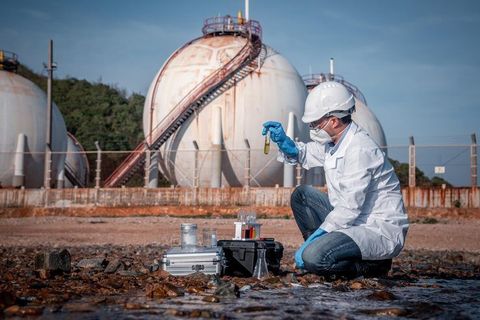
Oilfield Chemicals Basics: Understanding Chemical Roles in Oil and Gas Operations
Oilfield chemicals are specialized chemical substances used throughout oil and gas operations to manage physical and chemical conditions during exploration, drilling, production, processing, and transportation.
They can help control issues such as corrosion, unwanted deposits, foaming, changing fluid properties, and microbial activity. Understanding oilfield chemicals basics provides useful background on how chemical processes interact with equipment, underground formations, fluids, and operating environments.
Context
What Are Oilfield Chemicals?
Oilfield chemicals are formulated for specific conditions encountered in oil and gas operations. Their functions vary according to the stage of an operation and the properties of the fluids, rock formations, temperatures, pressures, and equipment involved.
Some chemicals are used during drilling, while others are associated with well completion, production, flow assurance, water treatment, or pipeline operation. A chemical that performs a particular function in one environment may not be suitable for another because operating conditions can vary considerably.
Where Oilfield Chemicals Are Used
Oil and gas operations involve several stages, and chemical requirements can change throughout the production cycle. Common application areas include:
- Drilling fluids, where additives influence viscosity, filtration, density, and stability.
- Well completion, where chemical treatments can support fluid control and equipment protection.
- Production systems, where chemicals can address corrosion, deposits, foaming, and other operating issues.
- Pipelines, where chemical programs can help manage corrosion, deposits, and flow-related challenges.
- Water handling, where treatment chemicals can influence suspended solids, scaling, corrosion, and microbial growth.
The purpose of these chemicals is generally connected to controlling a specific physical or chemical condition rather than simply adding chemicals to a process.
Common Categories
Oilfield chemicals can be grouped according to their functions. Corrosion inhibitors are used to reduce the interaction between corrosive fluids and metal surfaces. Scale inhibitors help control mineral deposits that can restrict flow or accumulate on equipment.
Other categories include demulsifiers, which assist with separating water and oil; biocides, which are used to manage microorganisms; defoamers, which reduce unwanted foam; and friction-reducing additives, which can influence fluid movement. Drilling-fluid additives form another broad category because drilling fluids require different properties depending on the geological and operational environment.
Importance
Why Chemical Control Matters
Oil and gas systems can expose equipment and fluids to changing temperatures, pressures, water content, dissolved minerals, gases, and other substances. These conditions can create operational challenges if they are not properly controlled.
For example, corrosion can gradually affect metal surfaces, while mineral deposits can restrict passages and interfere with fluid movement. Changes in fluid properties can also influence pumping, separation, filtration, and transportation processes.
Effects on Operations
Chemical management is connected to several practical considerations, including equipment condition, fluid handling, production continuity, and environmental management. The appropriate chemical approach depends on the specific operating environment rather than on a single formula that applies everywhere.
Chemical selection can involve factors such as:
- Fluid composition
- Temperature and pressure
- Water chemistry
- Equipment materials
- Mineral content
- Microbial conditions
- Treatment objectives
- Handling and environmental requirements
Monitoring is also important because conditions can change as a well or production system develops. A chemical program may therefore be adjusted according to observed operating conditions and measured results.
Understanding the Main Chemical Roles
The following table provides a simple overview of several common categories:
| Chemical Category | General Role | Common Area |
|---|---|---|
| Corrosion inhibitors | Reduce corrosion reactions on metal surfaces | Wells and pipelines |
| Scale inhibitors | Control mineral deposit formation | Production systems |
| Demulsifiers | Assist separation of oil and water | Processing |
| Defoamers | Reduce unwanted foam | Processing and treatment |
| Biocides | Manage microbial activity | Water and production systems |
| Drilling additives | Adjust drilling-fluid properties | Drilling |
| Friction reducers | Influence fluid-flow resistance | Selected production operations |
These categories can overlap in practical applications, and specific formulations are selected according to operating conditions and treatment objectives.
Recent Updates
Changing Chemical Management
Recent developments across the oil and gas sector have placed greater attention on monitoring, efficiency, environmental considerations, and more precise chemical application. Rather than relying only on fixed treatment schedules, some operations increasingly use measurements and process data to understand changing conditions.
Digital monitoring can provide information about fluid characteristics, equipment conditions, pressure behavior, and chemical performance. This can support more informed adjustments when operating conditions change.
Environmental Considerations
Environmental considerations have also become an increasingly important part of chemical management. Operators may examine chemical composition, handling procedures, discharge requirements, storage practices, and potential effects on surrounding environments.
Research and development in this area includes formulations designed around specific operating requirements while considering factors such as biodegradability, toxicity profiles, chemical persistence, and overall material efficiency. Regulatory requirements differ between regions, so chemical use is subject to the rules applicable to a particular operation.
Data-Based Monitoring
Automation and digital technologies are becoming more connected with chemical monitoring. Sensors, laboratory analysis, process-control systems, and data platforms can provide information that helps technical teams understand chemical conditions over time.
This trend reflects a broader movement toward measured and condition-based chemical management. The technology does not replace technical assessment, but it can provide additional information for evaluating operational conditions.
Tools and Resources
Chemical Reference Resources
Several types of resources can help readers understand oilfield chemicals and their applications. Technical dictionaries, chemical safety documentation, drilling references, petroleum engineering textbooks, and regulatory publications can explain terminology and general chemical functions.
Safety Data Sheets, commonly called SDS documents, provide information about chemical hazards, handling, storage, emergency measures, and other safety considerations. They are particularly relevant when dealing with specific chemical products.
Calculators and Technical Tools
Engineering calculators and petroleum-industry software can help users examine fluid properties, pressure relationships, flow behavior, corrosion conditions, and other technical variables. Spreadsheet templates can also be used to organize laboratory measurements, chemical treatment records, equipment observations, and monitoring results.
Useful resource types include:
- Petroleum engineering reference databases
- Chemical compatibility charts
- Fluid-property calculators
- Corrosion monitoring templates
- Scale prediction tools
- Drilling-fluid calculation resources
- Regulatory and environmental databases
- SDS repositories and chemical documentation platforms
The usefulness of any tool depends on the quality of its input data and the operating assumptions behind the calculation.
FAQs
What are oilfield chemicals used for?
Oilfield chemicals are used for functions such as corrosion control, scale management, fluid separation, foam reduction, microbial control, and adjustment of drilling-fluid properties. Their application depends on the specific stage and conditions of an operation.
Why are oilfield chemicals important in oil and gas operations?
Oilfield chemicals can help manage chemical and physical conditions that affect wells, pipelines, fluids, and processing equipment. Proper chemical management is connected with equipment protection, fluid handling, operational control, and environmental considerations.
What are the main types of oilfield chemicals?
Common categories include corrosion inhibitors, scale inhibitors, demulsifiers, defoamers, biocides, drilling-fluid additives, and friction-reducing additives. Each category has a different purpose and may be used under specific operating conditions.
How are oilfield chemicals selected?
Selection depends on factors such as fluid composition, temperature, pressure, water chemistry, equipment materials, mineral content, microbial conditions, and regulatory requirements. Laboratory testing and field monitoring may be used to evaluate chemical behavior under relevant conditions.
Are oilfield chemicals used during drilling and production?
Yes. Different chemical categories can be used during drilling, well completion, production, water handling, processing, and transportation. The chemical requirements generally change as the operation moves through different stages.
Conclusion
Oilfield chemicals play various roles in managing chemical and physical conditions throughout oil and gas operations. Their applications include corrosion control, scale management, fluid separation, drilling-fluid adjustment, microbial management, and flow-related processes. Recent industry trends place greater attention on monitoring, data-based chemical management, environmental considerations, and operational efficiency. Understanding these basic categories and functions provides a clearer view of how chemical processes interact with wells, equipment, fluids, and production systems.

Related Post...

High-Capacity Commercial Battery Storage Factory Systems Insights for Large Facilities
Updated: October 19, 2026
Read More
Commercial Event Generator Rentals Guide for Reliable Event Power Planning
Updated: October 19, 2026
Read More
Refrigeration Control Systems Guide for Understanding Cooling Regulation
Updated: October 19, 2026
Read More