Industrial Tanks Overview of Storage Systems, Construction Materials, and Applications
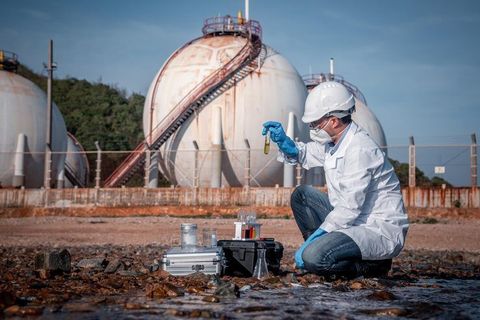
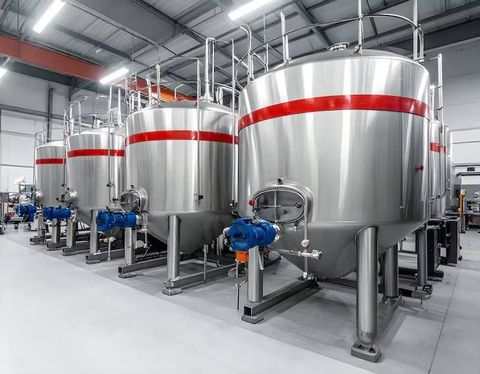
Industrial tanks are containers designed to store liquids, gases, and certain solid materials used in manufacturing, agriculture, energy production, water treatment, and chemical processing.
An industrial tanks overview of storage systems, construction materials, and applications explains how these structures are designed, what materials they use, and how they support different industrial activities. Their size and configuration vary according to the substances stored, available space, operating conditions, and safety requirements.
Storage tanks have been used for centuries to hold water, food products, fuels, and other essential materials. Modern industrial tanks developed alongside advances in metallurgy, chemical processing, construction methods, and manufacturing technology. Today, they range from small process vessels inside factories to large tanks used for municipal water storage, petroleum products, and industrial chemicals.
Industrial tanks may operate at atmospheric pressure, under internal pressure, or under vacuum conditions. Some are installed above ground, while others are placed underground or integrated into industrial equipment. The design must account for the stored material's properties, temperature, pressure, environmental exposure, and potential effects on the surrounding area.
Common Types of Industrial Storage Systems
Industrial storage systems are generally classified by their structure, operating conditions, and intended application.
Fixed-roof tanks: These tanks have a permanent roof and commonly store liquids under atmospheric or relatively low-pressure conditions.
Floating-roof tanks: These use a roof that moves with the liquid level and are often associated with large-scale storage of certain petroleum products.
Pressure vessels: These enclosed containers are engineered to hold gases or liquids at pressures above or below surrounding atmospheric pressure.
Underground storage tanks: Installed below ground, these systems are used for applications such as fuel storage and selected water or chemical storage arrangements.
Process tanks: These hold materials during manufacturing operations, including mixing, heating, cooling, and chemical reactions.
Water storage tanks: These maintain supplies for industrial processes, fire protection, irrigation, and other water-related needs.
The appropriate configuration depends on the material and the conditions under which it must be stored. A tank intended for water at ambient temperature may require a very different design from one containing a corrosive chemical or a pressurized gas.
Construction Materials Used in Industrial Tanks
The construction material influences a tank's strength, durability, compatibility with stored substances, and maintenance requirements.
Carbon steel is widely used in industrial storage because of its mechanical strength and suitability for many large structures. Stainless steel provides greater resistance to corrosion in certain environments and is used in food processing, pharmaceuticals, and chemical applications. Fiberglass-reinforced plastic can resist various corrosive substances while remaining relatively lightweight, although its chemical compatibility and temperature limits must be evaluated.
Polyethylene and other engineered plastics are used for selected water, chemical, and liquid storage applications. Concrete tanks are common in water treatment and infrastructure projects. Material selection depends on chemical compatibility, structural loading, temperature, exposure to sunlight, and applicable design standards.
Importance
Industrial tanks support activities that affect daily life, including drinking-water distribution, food production, electricity generation, fuel storage, and wastewater treatment. They help facilities maintain supplies between deliveries, manage fluctuations in production, and keep materials available for continuous processes.
Appropriate storage arrangements also help reduce the risk of leaks, contamination, material degradation, and interruptions to industrial operations. Poorly selected materials or unsuitable designs can lead to corrosion, structural damage, pressure-related failures, and environmental pollution. For this reason, tank selection involves more than determining the required storage volume.
Safety and Environmental Considerations
The hazards associated with an industrial tank depend on its contents and operating conditions. Flammable liquids may create fire hazards, corrosive substances can damage unsuitable materials, and pressurized systems may release energy if structural integrity is compromised.
Important design and operating considerations include:
Containment: Structures and surrounding arrangements should account for potential leaks or spills.
Ventilation and pressure control: Appropriate systems help manage pressure changes and prevent unsafe operating conditions.
Corrosion protection: Coatings, compatible materials, and suitable inspection practices can limit deterioration.
Access and inspection: Safe access allows authorized personnel to examine structural components and identify defects.
Environmental protection: Secondary containment and leak detection may be required for certain stored substances and installations.
Requirements vary by jurisdiction, tank type, and stored material. Applicable regulations and engineering standards determine which protective measures are necessary.
Comparing Storage Materials
| Material | Common applications | Main considerations |
|---|---|---|
| Carbon steel | Fuel, water, and many industrial liquids | Corrosion protection and structural integrity |
| Stainless steel | Food processing and selected chemicals | Grade selection and chemical compatibility |
| Fiberglass-reinforced plastic | Corrosive liquids and selected water systems | Resin compatibility and temperature limits |
| Polyethylene | Water and compatible chemicals | Temperature, ultraviolet exposure, and mechanical loading |
| Concrete | Water storage and wastewater infrastructure | Cracking, sealing, and reinforcement condition |
No single material suits every application. The stored substance, operating temperature, structural demands, expected lifespan, and inspection requirements all influence material selection.
Recent Updates
Developments in industrial tank systems during 2024–2026 have continued to focus on monitoring technology, environmental protection, corrosion management, and improved construction methods. Adoption varies across industries and regions, and not every technology is appropriate for every tank installation.
Digital Monitoring and Leak Detection
Tank operators increasingly use sensors to monitor liquid levels, temperature, pressure, and other operating conditions. Connected monitoring platforms can help identify abnormal changes, support inventory tracking, and notify operators when readings move outside established limits.
Leak detection technologies may include pressure monitoring, liquid-level analysis, external sensors, and systems designed to identify escaped material. Their accuracy depends on installation, calibration, the stored substance, and the characteristics of the tank. Monitoring equipment supports inspection but does not eliminate the need to assess physical condition.
Corrosion Management and Inspection
Corrosion remains an important concern for steel tanks, particularly when they contain water, chemicals, or other substances that can damage metal surfaces. Inspection methods may include ultrasonic thickness measurements, visual examinations, coating assessments, and other techniques suited to the tank's construction.
Risk-based inspection planning considers factors such as tank age, operating conditions, previous defects, and the consequences of failure. Some facilities also use digital records to track inspection findings and monitor changes over time.
Sustainable Construction and Design
Current development trends include longer-lasting protective coatings, material-efficient designs, improved insulation, and methods that reduce construction waste. Certain facilities also examine ways to capture rainwater, improve water reuse, and reduce emissions associated with stored volatile liquids.
These developments require assessment of the tank's intended use and environmental conditions. A design change that works for one application may be unsuitable for another because of different chemical, structural, or regulatory requirements.
Tools and Resources
Several technical resources help users understand industrial tank capacity, materials, construction standards, and operating conditions.
Tank Capacity Calculators and Design References
Tank volume calculators estimate the capacity of cylindrical, rectangular, and other common geometries. For a vertical cylindrical tank, the basic volume calculation is:
Volume = π × radius² × height
This formula estimates the internal geometric volume when the tank's dimensions are known. Actual usable capacity may be lower because of operating limits, required empty space, internal components, and safety considerations.
Engineering drawings and equipment specifications provide information about dimensions, wall thickness, material grades, design pressure, and connections. Applicable engineering standards should be consulted when evaluating structural design or regulatory compliance.
Industry Websites and Inspection Resources
The following organizations provide relevant technical information:
American Petroleum Institute (API): Publishes standards and guidance covering certain petroleum storage tanks and inspection practices.
American Society of Mechanical Engineers (ASME): Provides codes and technical resources relevant to pressure vessels and mechanical engineering.
Occupational Safety and Health Administration (OSHA): Provides workplace safety information relevant to industrial operations.
U.S. Environmental Protection Agency (EPA): Publishes guidance on environmental protection, spill prevention, and selected storage-related requirements.
The applicability of any standard or regulation depends on the tank type, location, contents, and intended operation. General reference material does not replace a project-specific engineering assessment.
FAQs
What are industrial tanks used for?
Industrial tanks store water, fuels, chemicals, food ingredients, wastewater, and other materials. They are used in manufacturing, energy production, agriculture, infrastructure, and processing facilities.
What materials are used to construct industrial storage tanks?
Common materials include carbon steel, stainless steel, fiberglass-reinforced plastic, polyethylene, and concrete. Selection depends on chemical compatibility, pressure, temperature, structural requirements, and environmental exposure.
What are the main types of industrial tanks?
Common types include fixed-roof tanks, floating-roof tanks, pressure vessels, underground tanks, process tanks, and water storage tanks. Each type is designed for particular storage conditions and applications.
How is industrial tank capacity calculated?
Capacity can be estimated using the tank's internal dimensions and geometric shape. Cylindrical tanks use the formula π × radius² × height, while rectangular tanks use length × width × height.
How are industrial tanks inspected for safety?
Inspection methods may include visual examinations, thickness measurements, leak detection, and checks of coatings, foundations, fittings, and pressure-control equipment. The inspection method and interval depend on the tank design, contents, condition, and applicable requirements.
Conclusion
Industrial tanks are essential storage systems used across water management, manufacturing, energy, and chemical processing. Their design depends on storage requirements, construction materials, operating conditions, and environmental risks. Digital monitoring, corrosion assessment, and improved construction methods continue to influence tank management and design. Understanding these factors provides a foundation for evaluating how industrial storage systems function and why appropriate engineering controls matter.

Related Post...
Industrial Cooling System Performance Audit Basics: Understanding Cooling Performance
Updated: October 19, 2026
Read More
Commercial Event Generator Rentals Guide for Reliable Event Power Planning
Updated: October 19, 2026
Read More
High-Capacity Commercial Battery Storage Factory Systems Insights for Large Facilities
Updated: October 19, 2026
Read More