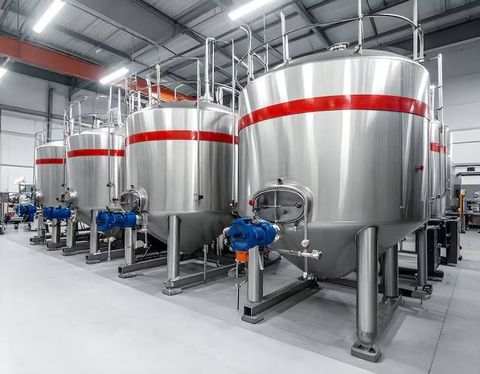
Industrial Water Purify: Discover Essential Facts About Purification Methods
Industrial water purify refers to the treatment of water used in manufacturing, processing, cooling, cleaning, and other industrial activities.
Industrial facilities may draw water from rivers, reservoirs, groundwater, municipal supplies, or previously used process streams. Before water can be reused or discharged, it may need treatment to reduce unwanted substances.
Industrial water purification exists because water quality can change significantly after it enters an industrial process. Suspended solids, dissolved minerals, oils, organic compounds, microorganisms, and other contaminants can enter the water. The treatment approach depends on the original water quality, intended use, and substances that need to be removed.
Understanding the purification process
Industrial treatment usually involves several stages rather than one single method. A basic treatment sequence may include screening, clarification, filtration, biological treatment, membrane separation, disinfection, or specialized chemical treatment.
Common methods include:
- Screening: Removes larger materials such as debris and particles.
- Coagulation and clarification: Helps small suspended particles join together and settle.
- Filtration: Removes remaining particles through media or membrane barriers.
- Biological treatment: Uses microorganisms to break down certain organic substances.
- Activated carbon: Adsorbs selected organic compounds and other substances.
- Membrane treatment: Uses membranes to separate particles, dissolved materials, or microorganisms.
- Disinfection: Reduces microorganisms through methods such as ultraviolet light or other controlled processes.
The sequence is normally selected according to water chemistry and the required water quality. A process designed for cooling water may differ from one intended for high-purity manufacturing applications.
Importance
Industrial water purification matters because water is involved in many activities that affect communities, ecosystems, agriculture, and manufacturing. Poorly managed industrial wastewater can introduce contaminants into rivers, lakes, groundwater, or municipal systems. Treatment helps control these risks when it is designed and operated according to applicable requirements.
Water reuse is another important reason for purification. Treated water can sometimes be used again for cooling, washing, process applications, landscaping, or other purposes where the required quality permits it. Reusing suitable water can reduce dependence on fresh sources and decrease the volume of wastewater requiring final management.
What purification methods address
Different contaminants require different treatment mechanisms. For example, suspended particles can often be reduced through clarification and filtration, while dissolved salts may require membrane processes.
| Treatment method | Main purpose | Typical application |
|---|---|---|
| Screening | Removes large debris | Initial treatment |
| Clarification | Separates suspended solids | Industrial wastewater |
| Sand or media filtration | Reduces particles | Pretreatment and polishing |
| Activated carbon | Adsorbs selected compounds | Organic contaminants |
| Ultrafiltration | Separates fine particles and microorganisms | Process water |
| Reverse osmosis | Reduces many dissolved substances | High-quality process water |
| Biological treatment | Reduces biodegradable organic matter | Wastewater treatment |
| UV treatment | Inactivates microorganisms | Final treatment or reuse |
Why water quality monitoring matters
Treatment performance depends on changing water conditions. Flow rate, temperature, pH, contaminant concentration, and other factors can influence how a treatment process performs. Regular monitoring can therefore help identify changes before they affect downstream equipment or water reuse.
Some industries also need to manage concentrated residues created during treatment. Membranes, adsorption systems, and other processes may separate contaminants from water without destroying them. These residual streams require appropriate handling according to their composition and applicable regulations.
Recent Updates
Industrial water treatment has increasingly focused on water reuse, advanced membranes, contaminant monitoring, and more detailed treatment planning. Recent developments also reflect growing attention to water availability, industrial expansion, and contaminants that can be difficult to remove through conventional treatment.
Water reuse receives greater attention
The U.S. Environmental Protection Agency introduced Water Reuse Action Plan 2.0 in 2026, with renewed attention to industrial water reuse, technology-related water demand, energy, and resource protection. The initiative includes activities related to industrial applications and the development of resources for different reuse situations.
This reflects a broader movement toward treating water as part of a circular process. Instead of viewing used water only as wastewater, industries can evaluate whether treated water can safely return to another stage of operations.
Advanced treatment and PFAS research
PFAS, a large group of persistent synthetic chemicals, has also received significant research attention. Treatment approaches studied by the EPA include granular activated carbon, ion exchange, nanofiltration, and reverse osmosis. The suitability of a particular method depends on the substances present and the characteristics of the water.
Recent regulatory and research activity has increased attention to monitoring, treatment performance, residual management, and source control. These developments are particularly relevant when industrial wastewater may contain substances that persist through conventional biological treatment.
Digital monitoring and process control
Modern treatment facilities increasingly combine sensors, laboratory testing, automated controls, and data analysis. These tools can monitor variables such as pH, conductivity, pressure, flow, turbidity, and membrane performance.
The general trend is toward more continuous information rather than relying only on occasional measurements. However, automated monitoring still depends on appropriate calibration, maintenance, sampling, and interpretation.
Tools and Resources
Several resources can help readers understand industrial water purification without requiring advanced technical training. Government water agencies provide regulatory information, treatment references, research documents, and reuse guidance.
The EPA Water Reuse and Recycling resource includes information on reuse applications, regulatory resources, research, and its REUSExplorer tool. The platform can help users review information about water reuse regulations and guidelines.
Treatment reference databases can also help readers compare purification processes based on contaminants. Useful information commonly includes:
- Water quality testing methods
- Treatment process descriptions
- Membrane and filtration principles
- Reuse guidelines
- Wastewater monitoring information
- Regulatory requirements
- Technical reports and case studies
Water quality calculators and process worksheets may also be used to examine flow, concentration, loading, and treatment requirements. Results from such tools should be interpreted in the context of actual laboratory data and applicable regulations.
FAQs
What is Industrial Water Purify?
Industrial water purify describes processes used to remove or reduce unwanted substances in water used by industrial facilities. Treatment may involve filtration, clarification, biological processes, membranes, adsorption, or disinfection.
Which Industrial Water Purify methods are commonly used?
Common methods include screening, clarification, media filtration, activated carbon, ultrafiltration, reverse osmosis, biological treatment, and ultraviolet treatment. The appropriate combination depends on the water quality and intended use.
Why is Industrial Water Purify important for water reuse?
Industrial water purify can help reduce contaminants to levels suitable for particular reuse applications. Reuse requirements vary, so treatment must match the intended purpose and relevant standards.
Can reverse osmosis remove dissolved substances?
Reverse osmosis uses a high-pressure membrane that can reduce many dissolved salts and other substances. It also creates a concentrated stream that requires appropriate management.
How are industrial water purification systems monitored?
Monitoring may include laboratory analysis and sensors for factors such as pH, conductivity, turbidity, pressure, temperature, and flow. The exact monitoring plan depends on the treatment process and water quality requirements.
Conclusion
Industrial water purification uses a combination of physical, chemical, biological, and membrane-based processes to manage different types of contaminants. The appropriate treatment sequence depends on source water, industrial activity, intended reuse, discharge requirements, and water chemistry. Recent developments show growing attention to water reuse, advanced treatment, PFAS research, and continuous monitoring. Understanding these principles provides a useful foundation for interpreting how industrial water treatment systems operate.

Related Post...

Industrial Safety Helmets Guide: Understanding Types, Features, and Workplace Protection
Updated: October 19, 2026
Read More
Automated Factory Inventory Optimization & WMS Setup Guide for Smarter Warehouse Management
Updated: October 19, 2026
Read More
PVC Laminate Production Line Guide: Understanding Manufacturing Processes
Updated: October 19, 2026
Read More