Women’s Trending Fashion: An Overview of Modern Style Directions
Women’s trending fashion describes the changing styles, silhouettes, colors, materials, and ways of dressing that appear across contemporary womenswear.
It includes everyday clothing as well as runway design, occasion wear, street style, and seasonal collections. Women’s fashion trends are shaped by cultural influences, designers, media, technology, changing lifestyles, and individual preferences.
The modern fashion landscape includes many overlapping categories. Trending women’s clothing can range from relaxed everyday pieces to structured tailoring, while women’s designer fashion and women’s luxury fashion often explore new interpretations of fabrics, proportions, craftsmanship, and presentation.
How Modern Womenswear Has Developed
Fashion has traditionally changed through seasonal collections, cultural movements, and evolving ideas about personal appearance. Today, those influences move more quickly because runway presentations, social media, digital publications, and online communities allow people to see new styles almost immediately.
Women’s fashion clothing now includes a broad combination of classic garments and newer interpretations. Trousers, skirts, dresses, shirts, jackets, knitwear, denim, and outerwear can appear in multiple proportions and styling combinations within the same season.
Main Categories of Women’s Fashion
Modern womenswear can generally be understood through several overlapping categories:
- Women’s contemporary clothing focuses on current silhouettes and adaptable everyday designs.
- Women’s designer clothing reflects individual design approaches and seasonal creative directions.
- Women’s premium fashion commonly emphasizes materials, construction, and detailed finishing.
- Women’s high fashion clothing is associated with experimental design, runway presentation, and distinctive artistic concepts.
- Women’s luxury clothing often combines refined materials, craftsmanship, heritage techniques, and distinctive design language.
These categories are not completely separate. A single fashion collection can contain elements associated with several of them.
Importance
Women’s fashion trends matter because clothing is closely connected with everyday activities, climate, culture, professional settings, social occasions, and personal expression. Changes in fashion can influence what shapes, fabrics, colors, and combinations become visible across different environments.
For the general public, understanding current fashion directions can also make it easier to interpret the large amount of clothing information appearing through magazines, websites, social platforms, stores, and fashion events.
Changing Approaches to Personal Style
Modern women’s fashion outfits increasingly combine different categories rather than following one strict aesthetic. A tailored jacket may be worn with relaxed trousers, while a delicate skirt may be paired with a structured outer layer.
This mixing of references has become an important part of contemporary dressing. It allows classic pieces, seasonal items, vintage influences, and modern silhouettes to appear together without requiring an entire wardrobe to follow one trend.
The Role of Seasonal Fashion
Women’s seasonal fashion traditionally follows spring/summer and fall/winter cycles, with transitional collections appearing between them. Climate differences, international fashion calendars, and changing lifestyles have made these divisions less rigid.
Designers increasingly present pieces that can work across multiple settings and seasons. Layering is particularly useful because the same garments can be combined differently as temperatures and occasions change.
Understanding Fashion Categories
The differences between fashion categories can be summarized as follows:
| Fashion Category | Common Focus | Typical Characteristics |
|---|---|---|
| Contemporary clothing | Current everyday style | Modern silhouettes and adaptable pieces |
| Designer clothing | Individual design identity | Distinctive cuts, details, and collections |
| Premium fashion | Materials and construction | Refined fabrics and detailed finishing |
| Luxury fashion | Craftsmanship and design heritage | Specialized techniques and distinctive materials |
| High fashion | Creative experimentation | Dramatic shapes, unusual construction, and runway concepts |
These descriptions are general rather than strict industry definitions, since terminology can vary between fashion publications and organizations.
Recent Updates
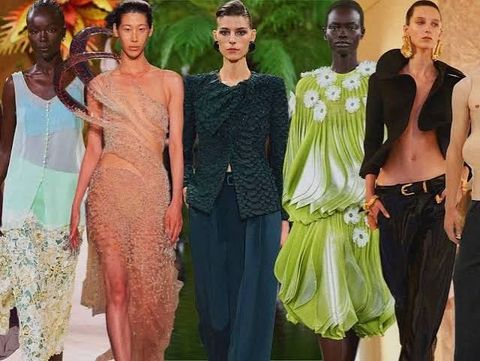
From 2024 through 2026, women’s fashion has shown a combination of relaxed dressing, structured tailoring, expressive proportions, layered styling, and renewed interest in decorative details. Recent runway reporting also indicates that designers have been revisiting earlier fashion periods while adapting them for contemporary wardrobes.
Tailoring and Relaxed Proportions
Tailoring continues to appear in women’s fashion collections, but its presentation has expanded beyond traditional office clothing. Softer jackets, relaxed trousers, layered separates, and altered proportions have appeared alongside more structured pieces. Recent pre-fall reporting has also emphasized versatile layering and practical styling.
This direction can be seen in women’s designer fashion collections through combinations of sharp construction and softer fabrics. It also appears in everyday women’s fashion outfits where tailored garments are paired with casual or fluid pieces.
Sheer Fabrics and Layering
Sheer materials have remained visible across recent womenswear collections. Designers have used transparent or semi-transparent fabrics in dresses, skirts, tops, and layered combinations, with styling often used to control how much of the fabric is visible.
Layering has therefore become an important styling technique. A sheer garment can be placed over an opaque layer, while jackets, shirts, knitwear, and skirts can be combined to create different levels of coverage and texture.
Feminine Details and Historical References
Recent collections have also revisited lace, floral patterns, romantic silhouettes, Art Deco references, and other historical influences. Fall 2026 runway coverage, for example, identified lace, decorative textures, dramatic proportions, and references to earlier decades among notable design directions.
At the same time, designers have continued to reinterpret older references rather than reproducing historical clothing exactly. This approach can be seen in both women’s luxury fashion clothing and contemporary collections.
Expressive Color and Texture
Color and texture remain important tools for creating visual variation. Recent reporting has highlighted shades ranging from soft pinks to deeper seasonal colors, alongside materials such as lace, velvet, leather, mesh, and textured fabrics.
The result is a fashion environment where minimal and decorative approaches can exist at the same time. Consumers may encounter simple silhouettes in one collection and highly embellished pieces in another.
Tools and Resources
Several resources can help readers understand women’s fashion collections without relying on a single trend source. Fashion magazines, runway archives, designer websites, museum collections, and digital fashion databases can provide background on garments, designers, fabrics, and historical references.
Fashion Research Resources
Useful resources include:
- Runway archives for reviewing women’s designer fashion collections across seasons.
- Fashion museum websites for studying historical clothing and design movements.
- Digital fashion magazines for tracking women’s fashion trends and seasonal reporting.
- Brand and designer collection pages for examining individual design approaches.
- Wardrobe planning templates for organizing clothing by season, occasion, color, or garment type.
- Fabric reference guides for understanding differences among cotton, wool, silk, linen, leather, synthetics, and blended materials.
Fashion calendars and runway databases can also help readers distinguish between current collections, seasonal presentations, and older archival references.
Digital Styling and Wardrobe Tools
Digital wardrobe applications and outfit-planning platforms can help organize existing garments and visualize different combinations. Basic spreadsheets can also be used to record clothing categories, colors, fabrics, seasons, and frequency of use.
These tools do not determine personal style. Their main purpose is organization and comparison, which can be useful when examining complete women’s fashion collections or creating combinations from an existing wardrobe.
FAQs
What are women’s trending fashion styles?
Women’s trending fashion currently includes a mixture of relaxed tailoring, layered outfits, expressive proportions, sheer materials, decorative details, historical references, and varied color palettes. The exact direction changes between seasons and regions.
What are the main women’s fashion trends in 2026?
Current women’s fashion trends include structured and relaxed tailoring, layering, sheer fabrics, varied proportions, feminine detailing, and references to earlier fashion periods. These elements appear differently across designers and collections.
What is the difference between women’s designer fashion and contemporary clothing?
Women’s designer fashion generally reflects a specific designer or fashion house and its creative direction. Women’s contemporary clothing usually refers more broadly to current styles designed around modern wardrobes and everyday use.
What defines women’s luxury fashion clothing?
Women’s luxury fashion clothing is generally associated with distinctive design, specialized craftsmanship, carefully selected materials, and established design traditions. The term can cover both highly formal garments and more practical pieces.
How do women’s fashion collections change by season?
Women’s fashion collections often change through differences in fabrics, colors, silhouettes, layering, and garment types. Seasonal collections may also reinterpret recurring design ideas rather than introducing completely new categories each time.
Conclusion
Women’s trending fashion is shaped by a combination of seasonal collections, cultural influences, historical references, technology, and changing approaches to personal style. Current women’s fashion trends show that tailoring, layering, expressive proportions, sheer materials, and decorative details can coexist within the same fashion landscape. Women’s designer fashion, contemporary clothing, premium fashion, and luxury clothing represent different areas of this broader environment. Understanding these categories provides useful context for interpreting modern women’s fashion clothing and seasonal collections.

Related Post...
Women’s Trending Fashion: An Overview of Modern Style Directions
Updated: October 17, 2026
Read More