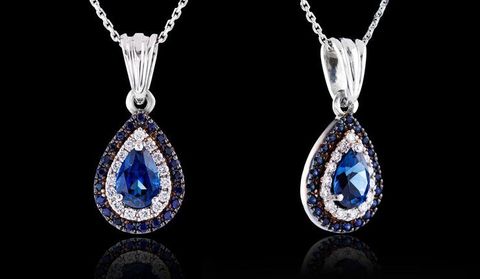
Diamond Jewelry Insights: Exploring Designs, Materials, and Craftsmanship
Diamond jewelry combines a gemstone with a crafted setting to create pieces such as rings, earrings, necklaces, bracelets, and pendants.
Its history reaches back centuries, while modern diamond grading and jewelry production have made it easier to describe a diamond’s physical characteristics in consistent terms.
A useful starting point is the 4Cs: cut, color, clarity, and carat weight. These four characteristics describe different aspects of a diamond. Cut relates to proportions and facet arrangement, color describes the degree of body color, clarity considers internal and external characteristics, and carat weight measures mass. GIA describes the 4Cs as a framework for communicating diamond characteristics consistently.
Importance
Understanding designs and materials
Diamond jewelry is shaped by two connected elements: the diamond and the material surrounding it. The design determines how the stone is held, how light reaches it, and how the piece looks when worn. Common setting styles include prong, bezel, channel, pavé, and halo arrangements.
Metals also affect appearance and physical characteristics. Gold may be available in different karats and colors, while platinum is a dense metal often used in fine jewelry. Silver can appear in decorative pieces, although its physical properties differ from those of gold and platinum.
Why craftsmanship matters
Craftsmanship involves tasks such as forming metal, preparing settings, positioning stones, polishing surfaces, and checking symmetry. In a diamond, cutting craftsmanship affects how its facets interact with light. GIA notes that cut evaluation considers factors such as brightness, fire, scintillation, weight ratio, durability, polish, and symmetry.
For everyday readers, this means a diamond should not be understood only through its carat weight. Two stones with the same carat weight can have different appearances because their cut, color, clarity, proportions, and other characteristics can differ.
Comparing key diamond characteristics
| Characteristic | What it describes | Why it matters |
|---|---|---|
| Cut | Facet arrangement and proportions | Influences light performance and appearance |
| Color | Degree of color in the diamond | Helps describe visual appearance |
| Clarity | Inclusions and blemishes | Describes internal and surface characteristics |
| Carat weight | Diamond mass | Indicates how much the stone weighs |
The table provides a simplified overview. Professional grading uses defined methods and controlled conditions, so visual inspection alone cannot reproduce a laboratory assessment.
Recent Updates
Growth of laboratory-grown diamonds
From 2024 through 2026, laboratory-grown diamonds have remained an important part of discussions about diamond jewelry. GIA research published in 2024 described increases in the quantity, size, and quality of laboratory-grown diamonds and discussed the two main growth methods, chemical vapor deposition and high-pressure, high-temperature processes.
This development has also increased the importance of clear identification. Laboratory-grown diamonds have essentially the same optical, physical, and chemical properties as natural diamonds, but their origin is different. Clear terminology helps distinguish laboratory-grown material from mined material.
Changes in laboratory-grown diamond assessment
In June 2025, GIA announced a revised approach to describing laboratory-grown diamonds. From October 1, 2025, its updated assessment used descriptive overall categories of Premium and Standard for eligible laboratory-grown diamonds, based on a combination of characteristics such as clarity, color, polish, symmetry, and cut.
The change illustrates a broader trend toward clearer separation between systems used to describe natural and laboratory-grown diamonds. Existing reports remain relevant, while newer documentation may use a different format depending on the type and date of assessment.
Continued attention to cut and craftsmanship
In 2026, GIA published updated educational material explaining its round brilliant cut grade and the factors used to evaluate diamond appearance. The discussion emphasizes brightness, fire, scintillation, durability, polish, symmetry, and weight ratio.
This focus reflects an ongoing interest in the relationship between diamond design and craftsmanship. Rather than treating carat weight as the only measure, modern diamond education increasingly explains how multiple characteristics work together.
Tools and Resources
Diamond grading references
The GIA 4Cs educational resources explain cut, color, clarity, and carat weight in accessible language. Its grading report information can also help readers understand how laboratory assessments document a diamond’s characteristics.
Diamond report verification
A report-checking tool can help confirm whether the information on a grading report matches the record held by the issuing laboratory. This is useful when a reader needs to understand the documentation connected with a particular stone.
Design and setting references
Jewelry design libraries, gemological glossaries, metal reference charts, and setting diagrams can help explain terms such as bezel, pavé, halo, solitaire, channel, and prong. These resources are useful for understanding how different designs hold diamonds and how metal affects the overall structure.
Care references
Diamond jewelry can accumulate oils, dust, and residue during normal use. General care guidance commonly covers gentle cleaning, careful storage, and attention to settings. GIA notes that warm water, mild soap, and a soft toothbrush can be used for routine cleaning, while treated diamonds may require additional care around heat and chemicals.
FAQs
What are the main characteristics of diamond jewelry?
Diamond jewelry can be understood through the diamond’s cut, color, clarity, and carat weight, together with the design, setting, metal, craftsmanship, and overall construction.
How do diamond jewelry designs differ?
Designs differ through stone shape, setting style, metal type, proportions, and arrangement. Prong, bezel, channel, pavé, and halo settings create different structural and visual effects.
What is the role of craftsmanship in diamond jewelry?
Craftsmanship affects how a diamond is cut and how securely it is placed in a setting. Facet symmetry, polish, metalwork, and setting alignment can all influence appearance and durability.
What is the difference between natural and laboratory-grown diamonds?
Natural diamonds form through geological processes, while laboratory-grown diamonds are produced through controlled technological processes such as CVD or HPHT. Both can have diamond’s characteristic optical, physical, and chemical properties, but their origins differ.
Why are the 4Cs important in diamond jewelry?
The 4Cs provide a consistent framework for describing cut, color, clarity, and carat weight. They help readers understand the characteristics of a diamond and interpret grading information more clearly.
Conclusion
Diamond jewelry brings together gemstone characteristics, metal selection, design, and craftsmanship. The 4Cs provide a foundation for understanding diamonds, while setting styles and materials explain how individual pieces are constructed. Developments in laboratory-grown diamonds and updated assessment methods have made clear identification and documentation increasingly relevant from 2024 through 2026. Understanding these elements provides a clearer view of how diamond jewelry is designed, evaluated, and cared for.

Related Post...
Diamond Rings Insights: Understanding Diamond Quality, Ring Designs, and Settings
Updated: September 24, 2026
Read More
Diamond Jewelry Insights: Exploring Designs, Materials, and Craftsmanship
Updated: September 18, 2026
Read More
Fine Jewelry Collections: Timeless Elegance and Enduring Allure
Updated: December 30, 2025
Read More