Industrial Soft Starter: A Complete Guide to Motor Starting Systems
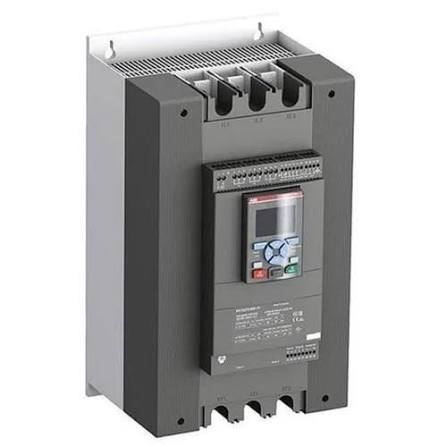
An industrial soft starter is an electrical device designed to control the voltage supplied to an electric motor during startup.
It gradually increases the voltage, allowing the motor to accelerate more smoothly than it would with direct-on-line starting. Industrial motor soft starter technology is widely used in manufacturing plants, water treatment facilities, material handling operations, and other environments that rely on electric motors.
Traditional motor starting methods can produce high initial current and sudden mechanical forces. These effects may place additional stress on electrical networks, motors, belts, gears, and connected machinery. Industrial motor starting systems such as soft starters were developed to manage these conditions and provide controlled motor acceleration.
A three phase soft starter typically uses semiconductor components, such as thyristors, to regulate the voltage supplied to a three-phase motor. By adjusting the voltage during startup, the device helps control the motor's acceleration and starting current. Once the motor reaches its operating speed, some soft starters use a bypass contactor to reduce power losses within the electronic components.
How an Industrial Soft Starter Works
An industrial soft starter controls the voltage supplied to a motor during its starting period. The controller gradually adjusts the electrical supply according to configured settings, allowing the motor to accelerate over a selected time.
Common operating functions include:
- Voltage ramping: Gradually increases the motor voltage during startup.
- Current limiting: Restricts starting current within configured limits.
- Soft stopping: Gradually reduces motor voltage during shutdown when supported.
- Motor protection: Monitors selected operating conditions and responds to certain electrical faults.
An adjustable voltage soft starter allows operators to configure starting parameters according to the motor and application requirements.
Main Types of Industrial Soft Starters
Industrial soft starters are available in different configurations based on motor ratings, electrical supply, and operating conditions.
A low voltage soft starter system is commonly used with motors operating at standard industrial low-voltage levels. A high voltage motor soft starter is designed for higher-voltage applications and requires equipment appropriate to the electrical installation.
A heavy duty motor soft starter is intended for applications involving demanding starting conditions, such as high-inertia loads or frequent starting cycles. The actual operating limits depend on the device specifications and the motor's characteristics.
Importance
Industrial soft starters play an important role in controlling motor startup conditions. Sudden motor acceleration can affect electrical distribution systems and connected mechanical equipment, particularly in facilities operating several large motors.
Reducing Electrical and Mechanical Stress
When an electric motor starts directly across the supply, it can draw several times its normal operating current. This temporary current increase may cause voltage drops that affect other equipment connected to the same electrical network.
A soft starter for industrial motors can limit starting current and control acceleration. The gradual increase in motor speed can also reduce sudden mechanical forces on connected components, although the degree of reduction depends on the application and configuration.
Applications Across Industries
Industrial soft starters are used in different types of motor-driven equipment, including:
- Pumps: An industrial pump soft starter can help manage acceleration in water circulation, wastewater treatment, and fluid handling systems.
- Conveyors: A soft starter for conveyor systems can reduce abrupt acceleration that affects belts, materials, and mechanical connections.
- Fans and blowers: Controlled starting can help manage the initial load on ventilation and air movement equipment.
- Compressors: Soft starters can support controlled motor acceleration in certain compressor configurations.
- Industrial machinery: Motor starting control can be incorporated into production equipment that requires gradual acceleration.
The suitability of a soft starter depends on the load characteristics, starting frequency, motor design, and operating requirements.
Motor Protection and Operating Limitations
Soft starter and motor protection systems may include functions such as overload monitoring, phase-loss detection, and overtemperature protection. These features vary by model and configuration.
A soft starter does not replace every type of motor protection device. Proper coordination with circuit breakers, overload protection, grounding arrangements, and other electrical safety components remains necessary.
Recent Updates
From 2024 through 2026, industrial motor control has continued to develop through digital monitoring, improved communication capabilities, and greater integration with automation platforms. These developments are influencing how industrial soft starters are configured, monitored, and maintained.
Digital Monitoring and Control
A digital soft starter controller can provide configuration menus, operating information, diagnostic messages, and fault records. Some models include communication interfaces that allow operating data to be exchanged with programmable logic controllers and supervisory control systems.
Digital monitoring can help maintenance teams identify starting problems and observe equipment conditions. However, available functions differ between manufacturers and equipment models.
Integration With Industrial Automation
Industrial soft starter integration is increasingly connected with broader automation environments. Communication protocols can allow soft starters to exchange status information and receive selected commands from industrial control systems.
Enterprise motor control automation systems may combine soft starters, variable frequency drives, motor protection devices, and monitoring software. Each device performs a different function, so system design depends on the required motor speed control, starting characteristics, and operating conditions.
Energy and Equipment Management
Current industrial motor control developments also emphasize equipment monitoring and operational efficiency. Soft starters can reduce certain startup-related electrical and mechanical stresses, but they do not provide the same continuous speed regulation as variable frequency drives.
Selecting between these technologies requires consideration of the motor's operating cycle, load requirements, and control objectives.
| Feature | Industrial Soft Starter | Variable Frequency Drive |
|---|---|---|
| Main function | Controls motor startup and stopping | Controls motor speed and torque |
| Starting current | Can limit starting current | Generally provides controlled acceleration |
| Speed adjustment | Usually not intended for continuous speed control | Supports adjustable operating speed |
| Typical applications | Pumps, conveyors, fans | Pumps, fans, conveyors, process machinery |
| Operating principle | Regulates voltage during starting | Controls supply frequency and voltage |
Tools and Resources
Selecting and configuring industrial motor control equipment requires information about the motor, electrical supply, and connected machinery. Technical documents and calculation tools can help explain these requirements.
Selection and Sizing Resources
Motor nameplates provide information such as rated voltage, current, power, frequency, and connection details. These values are important when evaluating a soft starter panel for industrial motors.
Useful resources include:
- Motor starting current calculators for estimating electrical starting requirements.
- Manufacturer selection guides for comparing starter ratings and operating limits.
- Electrical design software for reviewing motor control circuit arrangements.
- Technical datasheets for checking voltage, current, overload settings, and environmental limits.
- Wiring diagrams and installation checklists for planning electrical connections.
Installation and Integration Resources
Industrial soft starter installation involves electrical connections, configuration, protection coordination, and functional testing. Installation requirements vary according to the equipment design and applicable electrical standards.
Custom industrial soft starter solutions may involve specific enclosure arrangements, communication interfaces, or protection requirements. Technical documentation and qualified electrical personnel are important when evaluating these configurations.
FAQs
What is an industrial soft starter used for?
An industrial soft starter controls the voltage supplied to an electric motor during startup. It helps manage starting current and acceleration in applications such as pumps, conveyors, fans, and industrial machinery.
How does a three phase soft starter work?
A three phase soft starter uses electronic switching components to regulate the voltage supplied to a three-phase motor. It gradually increases the voltage during startup to control motor acceleration and starting current.
What is the difference between a soft starter and a variable frequency drive?
A soft starter mainly controls motor acceleration and, in supported models, stopping. A variable frequency drive can control motor speed during normal operation by adjusting the supply frequency and voltage.
How is a soft starter for industrial motors selected?
Selection depends on motor voltage, rated current, load characteristics, starting frequency, acceleration requirements, and environmental conditions. Equipment ratings and manufacturer documentation are important considerations.
Does an industrial soft starter provide motor protection?
Some industrial soft starters include overload monitoring, phase-loss detection, and thermal protection functions. Additional protective equipment may still be required to meet the motor and installation's electrical safety requirements.
Conclusion
Industrial soft starters are designed to control motor startup by regulating the voltage supplied to electric motors. They are used in applications such as pumping, conveying, ventilation, and manufacturing, where controlled acceleration can help manage electrical and mechanical stress. Digital controllers and communication features are expanding the role of soft starters within industrial automation systems. Their selection and integration depend on motor characteristics, operating conditions, protection requirements, and the intended control functions.

Related Post...
Industrial Soft Starter: A Complete Guide to Motor Starting Systems
Updated: October 17, 2026
Read More
Pycnometers Guide to Density Measurement and Laboratory Applications
Updated: October 19, 2026
Read More
Industrial Sludge Dewatering: A Complete Guide to Processes and Applications
Updated: October 17, 2026
Read More