How Laminated Board Manufacturing Works: A Complete Guide
Laminated boards are engineered wood panels made by bonding multiple layers of wood or wood-based materials into a single panel.
Laminated board manufacturing combines material preparation, adhesive application, layer arrangement, pressing, trimming, sanding, and quality inspection to produce panels with controlled thickness and surface characteristics.
The exact process varies according to the board type, raw materials, adhesive system, surface requirements, and intended application. Understanding each production stage helps explain how laminated boards are converted from individual layers into finished panels.
Why Laminated Board Manufacturing Matters
Individual wood pieces or thin sheets can have variations in grain direction, dimensions, moisture, and surface condition. Lamination combines these materials into a more uniform panel structure.
A typical manufacturing system helps control:
- Material dimensions
- Moisture content
- Layer arrangement
- Adhesive distribution
- Pressing conditions
- Panel thickness
- Surface quality
- Final panel dimensions
The production sequence can be adapted for different laminated wood products and panel specifications.
How Laminated Board Manufacturing Works
Although production layouts differ, most laminated board manufacturing processes follow several basic stages.
1. Raw Material Selection
Production begins with wood components such as veneers, strips, boards, or other engineered wood layers. Materials are selected according to the required board structure and final application.
Important characteristics include:
- Wood species
- Thickness
- Moisture content
- Grain direction
- Surface condition
- Dimensions
- Defect level
Consistent raw materials make subsequent processing easier to control.
2. Material Preparation
The selected wood pieces are prepared before bonding. Preparation may involve cutting, trimming, planing, sanding, or sizing.
The objective is to create surfaces with suitable dimensions and conditions for adhesive bonding.
Automated cutting and handling systems can help maintain consistent material flow through this stage.
3. Moisture Conditioning
Wood naturally contains moisture, and its level can influence adhesive bonding and dimensional behavior.
Drying equipment or controlled conditioning systems may be used to bring materials into the required moisture range. The appropriate range depends on the wood type, adhesive system, and manufacturing specifications.
4. Surface Preparation
Before adhesive application, surfaces may be cleaned, sanded, or otherwise prepared.
A relatively clean and uniform surface helps the adhesive make consistent contact with the material. Surface preparation requirements depend on the raw material and adhesive formulation.
5. Adhesive Application
Adhesive is applied to the surfaces that will be bonded together.
Roller coaters, glue spreaders, spray systems, or other application equipment can distribute adhesive across the required area.
Important process variables include:
- Adhesive type
- Application rate
- Surface coverage
- Adhesive viscosity
- Open assembly time
- Material temperature
Consistent application is important because insufficient or excessive adhesive can affect the bonding process.
6. Layer Arrangement
After adhesive application, the individual layers are arranged into a stack.
The orientation of each layer depends on the board construction. In some laminated products, layers are aligned in the same general direction, while other engineered panels use different orientations to achieve specific structural characteristics.
Automated layup systems can position components according to predefined production patterns.
7. Pre-Pressing
Some laminated board production lines use pre-pressing before the main pressing operation.
Pre-pressing applies moderate pressure to hold the layers together and maintain alignment. This can make the assembled panel easier to handle before final bonding.
The need for pre-pressing depends on the material structure and adhesive system.
8. Hot or Cold Pressing
The assembled layers are placed into a press where controlled pressure is applied.
Depending on the adhesive and product design, pressing may use:
- Cold pressing
- Hot pressing
- Continuous pressing
- Multi-opening pressing
A laminated board pressing system controls pressure, temperature, and pressing duration according to the production requirements.
For thermosetting adhesive systems, heat can accelerate curing. Cold pressing may be used with adhesives that cure under lower-temperature conditions.
9. Panel Cooling and Conditioning
After pressing, panels may require cooling or conditioning before additional processing.
Cooling allows the bonded structure to stabilize, while conditioning can help bring the panel toward the required moisture and temperature conditions.
The specific sequence depends on the product and adhesive technology.
10. Trimming and Sizing
Pressed panels may have uneven edges or dimensions larger than the final specification.
Panel saws, edge trimmers, and sizing machines remove excess material and bring the board to the required length and width.
Dimensional control is important when panels will later be used in furniture, interiors, construction, or other applications.
11. Sanding and Surface Finishing
Sanding equipment can improve surface smoothness and help achieve a specified thickness.
Depending on the final product, additional finishing may include:
- Surface coating
- Decorative overlay application
- Edge treatment
- Sealing
- Polishing
The finishing stage depends strongly on the intended use of the laminated board.
12. Inspection and Stacking
Finished boards are inspected for dimensions, surface condition, bonding quality, and other specified characteristics.
Inspection may include visual checks, dimensional measurements, moisture measurement, and mechanical testing where required.
After inspection, stacking systems organize panels into bundles for storage or further processing.
Main Types of Laminated Board Manufacturing Equipment
Different machines perform different functions within the production line.
| Equipment | Main Function | Production Stage |
|---|---|---|
| Cutting machine | Sizes raw wood components | Material preparation |
| Planer | Controls material thickness | Preparation |
| Sanding machine | Prepares surfaces | Surface preparation |
| Dryer | Controls moisture | Conditioning |
| Glue spreader | Applies adhesive | Bonding |
| Layup system | Arranges layers | Assembly |
| Pre-press | Holds layers together | Pre-pressing |
| Hot press | Applies heat and pressure | Bonding |
| Cold press | Applies pressure | Bonding |
| Panel saw | Cuts finished panels | Sizing |
| Edge trimmer | Refines panel edges | Finishing |
| Sander | Smooths surfaces | Surface finishing |
| Stacker | Organizes finished boards | Handling |
Key Components of Laminated Board Production Machinery
Adhesive Application Systems
Glue spreaders and coating systems regulate how adhesive reaches the bonding surfaces. Roller speed, coating thickness, and material feed rate can influence application consistency.
Pressing Systems
Presses provide the pressure needed to bring the layers into close contact. Hot presses additionally control the temperature required by the adhesive system.
Hydraulic Systems
Hydraulic pumps, cylinders, valves, and control components can generate and regulate pressing force. Their operating condition is important for maintaining consistent pressure.
Heating Systems
Hot pressing equipment may use heated platens or other thermal systems. Temperature sensors and control systems help maintain the required process conditions.
Material Handling Systems
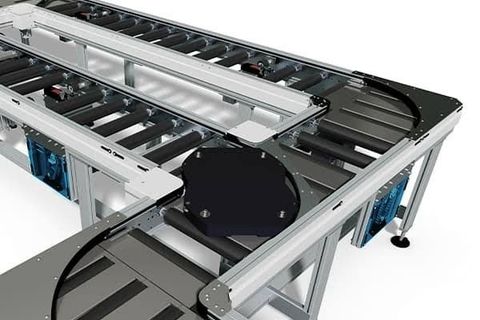
Rollers, conveyors, lifts, transfer tables, and stackers move boards between processing stages.
Control and Monitoring Systems
Sensors and programmable controls can monitor temperature, pressure, position, speed, and other production variables. Automated monitoring can help operators identify deviations from defined process parameters.
Factors Affecting Laminated Board Manufacturing
Several factors influence the manufacturing process and finished panel characteristics.
Raw Material Quality
Variation in wood thickness, moisture, grain direction, and surface condition can affect processing and bonding.
Adhesive Selection
Different adhesives have different curing temperatures, pressing requirements, application rates, and environmental characteristics.
Pressing Conditions
Pressure, temperature, and pressing duration must correspond to the adhesive and board structure.
Board Thickness
Thicker panels may require different pressing conditions from thinner boards. Material arrangement and adhesive distribution also change with panel construction.
Surface Requirements
Boards intended for visible furniture surfaces may require more controlled sanding and finishing than panels intended for concealed structural applications.
Production Capacity
Higher production volumes may require continuous presses, automated handling, faster adhesive application, and integrated control systems.
Manual vs. Automated Laminated Board Manufacturing
Automation can connect material preparation, adhesive application, layup, pressing, sizing, and stacking.
| Feature | Manual or Semi-Automated | Automated System |
|---|---|---|
| Material positioning | Operator controlled | Automated handling |
| Adhesive application | Manual adjustment | Controlled application |
| Layer arrangement | Operator placement | Automated layup |
| Press control | Operator monitored | Programmable control |
| Inspection | Visual or manual | Sensor-assisted |
| Panel stacking | Manual handling | Automated stacking |
The appropriate approach depends on production volume, product variety, available floor space, labor requirements, and process complexity.
Applications of Laminated Boards
Laminated boards are used in various wood-product applications, including:
- Furniture components
- Cabinets
- Shelving
- Interior panels
- Doors
- Wall systems
- Flooring components
- Construction products
- Decorative panels
- Engineered wood products
The board structure and finishing process vary according to the intended application.
Maintenance Considerations
Regular maintenance helps production equipment remain within its intended operating parameters.
Important areas include:
- Adhesive rollers and spreaders
- Press platens
- Hydraulic components
- Heating systems
- Conveyor rollers
- Cutting blades
- Sanding belts
- Sensors
- Electrical control systems
- Safety guards and emergency stops
Wood dust, adhesive residue, and material particles should be managed according to the equipment manufacturer's maintenance requirements.
Who Uses Laminated Board Manufacturing Equipment?
Laminated board manufacturing equipment is used by wood-processing plants, engineered wood manufacturers, furniture-component producers, panel manufacturers, and other facilities that produce laminated wood panels.
Operators manage production machinery, maintenance personnel inspect mechanical and electrical systems, and quality teams monitor panel characteristics against defined specifications.
Frequently Asked Questions
What is laminated board manufacturing?
Laminated board manufacturing is the process of joining multiple wood layers or wood-based components with adhesive and pressure to form a single panel.
How are wood layers bonded together?
Adhesive is applied to prepared surfaces, the layers are arranged into the required configuration, and controlled pressure is applied through pressing equipment. Some adhesive systems also require heat during curing.
What machines are used to manufacture laminated boards?
Common equipment includes cutting machines, planers, sanders, glue spreaders, layup systems, presses, panel saws, edge trimmers, and stacking equipment.
Why is moisture control important in laminated board production?
Moisture affects wood dimensions and can influence adhesive bonding. Controlled moisture conditions help maintain consistent processing and panel characteristics.
What does a hot press do in laminated board manufacturing?
A hot press applies controlled heat and pressure to assembled layers. Heat can accelerate curing for adhesives designed for elevated-temperature processing.
Conclusion
Laminated board manufacturing combines material preparation, moisture conditioning, adhesive application, layer arrangement, pressing, trimming, sanding, and inspection into a coordinated production process.
The machinery used at each stage has a specific function. Cutting and preparation equipment controls raw materials, adhesive systems establish the bonding layer, presses consolidate the structure, and finishing equipment prepares the completed panel for its intended application.
Equipment selection depends on material type, adhesive technology, board dimensions, production capacity, automation requirements, and surface specifications. A clear understanding of these factors helps explain how different machines contribute to a complete laminated board production line.

Related Post...
Industrial Tools Manufacturing Guide to Modern Production Processes
Updated: October 11, 2026
Read More
Industrial Metering Equipment: An Overview of Measurement Systems
Updated: October 09, 2026
Read More
Electromagnetic Positioning System: An Overview of Modern Positioning Technology
Updated: October 09, 2026
Read More