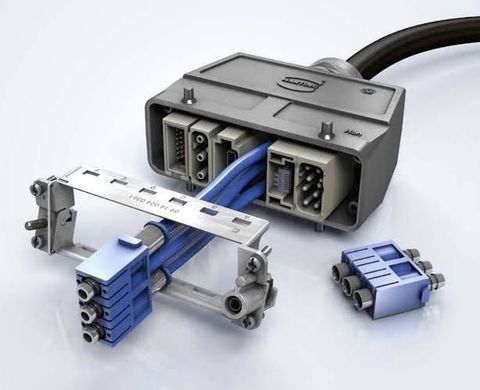
Industrial Cable Connector: An Overview of Types and Applications
An industrial cable connector is a component used to join electrical cables, wires, equipment, or control circuits while maintaining a dependable electrical connection.
These components are used across manufacturing facilities, power systems, transportation equipment, automation environments, and other industrial applications. Their design varies according to electrical ratings, environmental conditions, mechanical requirements, and the type of equipment being connected.
The development of industrial cable connectors is closely linked with the growth of electrical machinery and industrial automation. As equipment became more complex, electrical systems needed connection methods that could handle vibration, moisture, heat, mechanical movement, and repeated installation or maintenance activities. This created demand for specialized industrial electrical connectors rather than relying only on basic household connection methods.
Modern industrial cable connection systems can include connectors, terminals, housings, seals, locking mechanisms, and cable protection components. Together, these parts help establish connections between electrical circuits and equipment. Some systems are designed for power transmission, while others carry control signals, sensor information, or communication data.
Main Types of Industrial Cable Connectors
Industrial cable connectors are available in several configurations. The appropriate type depends on the application, electrical requirements, installation environment, and physical arrangement of the equipment.
Common categories include:
- Heavy duty cable connectors designed for demanding mechanical environments.
- Industrial power connectors used for electrical power connections.
- Industrial wire connectors used to join individual conductors.
- Waterproof industrial connectors designed to limit water and moisture entry when properly installed.
- High voltage cable connectors intended for electrical systems operating at elevated voltage levels.
- Industrial circular connectors commonly used in automation, control, instrumentation, and machinery.
- Industrial electrical connectors designed for different power, signal, and control applications.
The connector housing may be made from materials such as engineered plastics, aluminum alloys, stainless steel, or other materials selected for particular operating conditions. Contact materials and surface treatments also vary according to electrical and environmental requirements.
Connector Construction
An industrial cable connector commonly contains several functional parts. Electrical contacts carry current or signals, while an insulating body separates conductive elements. A housing protects the internal components from physical contact and environmental exposure.
Locking mechanisms can help keep mating connectors together. Seals and gaskets may be included where protection against dust or moisture is required. Cable glands or strain-relief components can also help reduce mechanical stress on the cable near the connection point.
Importance
Industrial cable connectors are important because electrical systems depend on secure and correctly configured connections. A connection that is unsuitable for its environment can contribute to electrical faults, signal interruptions, overheating, mechanical damage, or equipment downtime.
These components affect many industries, including manufacturing, energy, transportation, telecommunications, automation, construction equipment, and industrial machinery. They also indirectly affect everyday activities because electrical and automated systems are used throughout production, infrastructure, transportation, and public facilities.
Electrical and Mechanical Requirements
Different applications place different demands on a connector. A connection used inside a controlled cabinet may face different conditions from one installed outdoors or on moving machinery.
Important factors can include:
- Rated voltage and current.
- Temperature range.
- Exposure to water, dust, chemicals, or oils.
- Vibration and mechanical movement.
- Cable size and conductor arrangement.
- Number of connection points.
- Required protection level.
- Installation and maintenance requirements.
High capacity industrial power connectors may be designed for applications involving substantial electrical loads, while signal connectors may focus more on accurate data or control transmission.
Protection in Industrial Environments
Industrial environments can expose electrical connections to conditions that are uncommon in ordinary indoor applications. Moisture, dust, vibration, temperature changes, and mechanical impact can influence connection performance.
Waterproof industrial connectors can incorporate sealing structures to reduce moisture penetration. Their actual protection depends on the connector design, installation method, mating condition, cable diameter, and environmental exposure.
Industrial cable connector systems may also use protective housings or cable routing arrangements to reduce physical stress. Correct installation is important because even a connector designed for environmental protection can perform differently when incorrectly assembled.
Supporting Maintenance and Equipment Design
Industrial cable termination systems provide structured methods for connecting cables to equipment, panels, motors, control units, and other electrical components. Properly organized connections can make equipment easier to inspect and understand.
Industrial cable assembly systems may combine cables, connectors, terminals, protective components, and identification methods into a prepared assembly. This can simplify equipment integration when the assembly has been designed for the specific electrical and mechanical requirements.
Recent Updates
From 2024 through 2026, development in industrial connectors has generally followed wider changes in automation, electrification, connected equipment, and industrial data systems. Manufacturers and system designers have increasingly focused on connectors that can accommodate higher data rates, increased electrical demands, compact equipment layouts, and demanding environmental conditions.
Automation and Data Connectivity
Modern factories use sensors, controllers, robots, cameras, and networked equipment that require numerous electrical and communication connections. This has increased interest in connector systems capable of handling both power and data within industrial environments.
Advanced industrial cable connectors may incorporate designs intended for higher-speed communication alongside traditional power or control functions. Advanced industrial electrical connector systems can also be designed around modular equipment architectures where different connection types are combined.
Electrification and Higher Power Requirements
The wider use of electrically powered machinery and equipment has increased attention toward industrial power connections. High voltage industrial cable connection systems require careful consideration of insulation, spacing, contact design, temperature, and electrical protection.
High voltage cable connectors are generally engineered according to the voltage class and application. Their design can differ considerably from connectors intended for low-voltage control circuits.
Compact and Modular Designs
Industrial equipment is also becoming more compact, which can create demand for connectors that fit within smaller installation spaces. Modular designs allow different contact arrangements or connection functions to be combined within a common housing.
Advanced industrial cable connector systems can support modular equipment layouts by allowing power, control, signal, or communication connections to be organized within defined interfaces.
| Connector Category | Typical Application | Key Considerations |
|---|---|---|
| Heavy duty cable connectors | Machinery and industrial equipment | Mechanical protection and vibration |
| Industrial power connectors | Power distribution and equipment | Current, voltage, and temperature |
| Waterproof industrial connectors | Outdoor and exposed equipment | Sealing and environmental protection |
| Industrial circular connectors | Automation and control | Compact design and signal arrangement |
| High voltage cable connectors | High-voltage electrical systems | Insulation and electrical spacing |
| Industrial wire connectors | Internal wiring and control | Conductor size and secure termination |
Tools and Resources
Selecting and working with industrial cable connectors often requires technical documentation and measurement tools. Product datasheets, connector drawings, wiring diagrams, installation manuals, and electrical standards can help users understand compatibility and installation requirements.
Selection and Planning Resources
Useful resources include:
- Cable sizing references for checking conductor dimensions and electrical requirements.
- Connector pinout diagrams for identifying contact positions and circuit functions.
- Wiring templates for documenting connections.
- Electrical calculators for voltage drop, current, and conductor-related calculations.
- Protection-rating references for understanding environmental enclosure classifications.
- Manufacturer technical drawings for checking dimensions and mating arrangements.
- Electrical standards and installation guidelines for application-specific requirements.
Industrial electrical connection equipment may include crimping tools, terminal tools, cable preparation equipment, testing instruments, and inspection tools. The specific equipment depends on the connector design and installation method.
Documentation and Testing
Before an industrial cable connection system is integrated into equipment, technical documentation can be used to check electrical ratings, cable compatibility, contact arrangements, environmental specifications, and mechanical dimensions.
Testing may include continuity checks, insulation testing, visual inspection, and other procedures appropriate to the electrical system. High-voltage applications require additional precautions and procedures determined by applicable standards and qualified personnel.
FAQs
What is an industrial cable connector?
An industrial cable connector is a component used to connect cables, wires, equipment, or electrical circuits in industrial environments. It can be designed for power, control, signal, or communication applications.
What are industrial cable connectors used for?
Industrial cable connectors are used in machinery, automation equipment, control panels, power systems, transportation equipment, and other electrical installations. Their configuration depends on the electrical and environmental requirements of the application.
How do waterproof industrial connectors work?
Waterproof industrial connectors use features such as seals, gaskets, and appropriately designed housings to reduce water and moisture entry. The actual protection depends on the connector construction and correct installation.
What are high voltage cable connectors?
High voltage cable connectors are connection components designed for electrical systems operating at higher voltage levels. They require suitable insulation, contact arrangements, spacing, and installation procedures for their intended voltage class.
What are industrial circular connectors?
Industrial circular connectors use a round connector body and are commonly used for control, automation, instrumentation, power, and communication connections. Their contact arrangement and housing design vary according to the application.
Conclusion
Industrial cable connectors provide structured electrical and signal connections across machinery, automation equipment, power systems, and other industrial environments. Different connector types address different requirements involving current, voltage, environmental exposure, mechanical movement, and connection configuration. Recent developments have placed greater attention on electrification, automation, data connectivity, modular designs, and compact equipment. Understanding connector types and their electrical and environmental characteristics provides useful context for interpreting modern industrial cable connection systems.

Related Post...
Electrical Dielectric Materials: An Explore of Types and Applications
Updated: October 17, 2026
Read More
Smart Manufacturing Platform: A Complete Guide to Modern Industrial Automation
Updated: October 17, 2026
Read More
Industrial Soft Starter: A Complete Guide to Motor Starting Systems
Updated: October 17, 2026
Read More