Pycnometers Guide to Density Measurement and Laboratory Applications
A pycnometer is a laboratory instrument used to measure the density of liquids, solids, powders, and porous materials through carefully controlled volume and mass measurements.
Different designs use liquid displacement or gas displacement to determine material properties. Pycnometers are used in chemical laboratories, material testing facilities, pharmaceutical research, geological studies, and industrial quality control.
Density describes the mass of a material within a particular volume. It helps researchers understand material composition, compare samples, and evaluate changes during production or testing. Pycnometers provide a structured way to measure density when ordinary measuring containers may not provide sufficient precision.
Modern digital density measurement instruments include traditional glass vessels, automated weighing arrangements, and electronic gas displacement systems. Laboratory liquid pycnometers are commonly used for liquids and certain compatible materials, while gas-based instruments can measure the skeletal volume of powders and porous solids.
How Pycnometers Developed
Traditional pycnometers are small vessels with carefully defined volumes. A liquid sample is placed inside, and its mass is measured under controlled conditions. Comparing the sample mass with the known vessel volume allows the density to be calculated.
Gas displacement technology expanded the range of materials that could be examined. Helium pycnometers use gas expansion and pressure measurements to determine the volume occupied by a solid sample. Helium can enter many small, accessible spaces within porous materials, making the method useful for measuring skeletal density.
Main Types of Pycnometers
Several designs are used according to the sample and measurement objective.
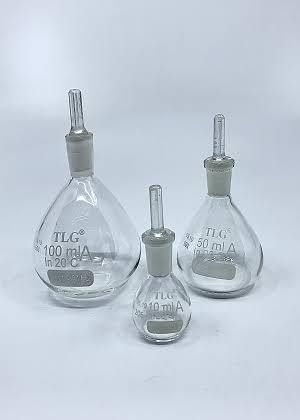
Liquid pycnometers: Typically glass vessels used to determine liquid density through mass and calibrated volume.
Gas pycnometers: Instruments that determine sample volume through gas displacement and pressure changes.
Helium pycnometers: Gas displacement instruments that use helium to measure the skeletal volume of compatible solid samples.
Automated pycnometer equipment: Systems that incorporate electronic controls, pressure sensors, software, or automated measurement sequences.
Each design has specific operating requirements. Sample compatibility, temperature stability, instrument calibration, and measurement procedures influence the reliability of the results.
Importance
Density measurement plays an important role in understanding the physical properties of materials. It can help identify variations in raw materials, evaluate powder characteristics, and monitor consistency during manufacturing. Laboratories use density data alongside other measurements to build a more complete picture of a sample.
Applications Across Different Industries
In chemical laboratories, density measurements help characterize liquids and mixtures. In construction materials research, measurements can support the examination of cement powders, minerals, aggregates, and other solid substances.
Food research, ceramics, polymers, and battery material development may also involve density testing. The method selected depends on whether researchers need bulk density, skeletal density, or the density of a liquid.
Powder and Porous Material Analysis
Powders contain spaces between individual particles, while porous solids may contain internal openings within their structures. These spaces can affect how volume is defined and measured.
Powder density measurement equipment can help researchers examine the skeletal volume of a powder sample. Gas displacement methods measure the volume inaccessible to the selected gas under the test conditions, rather than simply measuring the outer dimensions of the sample.
This distinction matters because bulk density includes spaces between particles in a packed sample, whereas skeletal density generally excludes accessible pores and interparticle spaces. Results from these methods should not be treated as interchangeable.
Factors That Affect Accuracy
Reliable measurements depend on several conditions:
Temperature: Changes in temperature can affect liquid volume and gas pressure.
Calibration: Incorrect calibration can introduce systematic measurement errors.
Sample preparation: Moisture, contamination, trapped gas, or unsuitable particle conditions may influence results.
Instrument condition: Leaks, damaged seals, or unstable weighing equipment can affect measurements.
Measurement procedure: Inconsistent filling, cleaning, or handling can reduce repeatability.
Laboratories usually follow documented procedures to control these factors and maintain consistent measurement conditions.
Recent Updates
Recent developments in pycnometry have generally focused on digital measurement, automation, data management, and improved integration with laboratory workflows. These developments reflect broader changes in analytical equipment rather than a complete change in the underlying principles of density measurement.
Digital and Automated Measurement
Digital density measurement instruments can record pressure, temperature, mass, and calculated volume electronically. Some systems guide operators through a measurement sequence and retain results for later review.
Automated pycnometer equipment can reduce the number of manual steps involved in repeated testing. However, automation does not eliminate the need for calibration, appropriate sample preparation, instrument maintenance, and checks for unusual readings.
Advances in Gas Displacement Systems
Laboratory gas pycnometer systems use controlled gas pressure and expansion measurements to estimate sample volume. Helium remains a common measurement gas because its small atoms can enter many accessible pores in suitable materials.
A helium density analyzer for laboratories may include electronic pressure sensors, temperature monitoring, software-based calculations, and automated measurement cycles. The measurement result still depends on sample characteristics, operating conditions, and the instrument's design.
Data Recording and Laboratory Integration
Modern laboratory equipment increasingly supports electronic data storage and digital reporting. These features can help researchers compare measurements across samples and maintain records of calibration, test conditions, and instrument settings.
When evaluating equipment information from pycnometer manufacturers, laboratories may compare measurement principles, sample capacity, calibration procedures, software functions, and compatibility with existing laboratory practices. Technical specifications should be assessed in relation to the intended application.
| Instrument type | Measurement principle | Typical applications |
|---|---|---|
| Liquid pycnometer | Mass and calibrated liquid volume | Liquids and compatible mixtures |
| Gas pycnometer | Gas expansion and pressure changes | Solid samples and powders |
| Helium pycnometer | Helium displacement | Skeletal volume and density |
| Digital density instrument | Electronic measurement and calculation | Laboratory density analysis |
| Automated pycnometer | Programmed measurement sequence | Repeated testing and data recording |
Tools and Resources
Selecting and operating pycnometry equipment involves understanding measurement principles, sample requirements, and laboratory procedures. Several types of resources can help users interpret results and document measurements.
Density Calculators and Laboratory Templates
A basic density calculator uses the relationship between mass and volume:
Density = Mass ÷ Volume
For example, a sample with a mass of 12 grams and a measured volume of 4 cubic centimetres has a density of 3 grams per cubic centimetre. The calculation is straightforward, but the accuracy of the result depends on the quality of the original measurements.
Laboratory templates can record sample identification, mass, temperature, measured volume, calibration status, test conditions, and calculated density. Consistent records make it easier to compare results and investigate unexpected differences.
Technical Documentation and Standards
Equipment manuals explain instrument setup, calibration, sample preparation, operating limits, and maintenance requirements. Laboratory staff can also consult relevant measurement standards and technical publications from recognized organizations.
When comparing helium pycnometer suppliers or gas displacement pycnometer manufacturers, useful evaluation points include:
Measurement range and stated precision.
Compatible sample types and sample quantities.
Gas requirements and operating pressure.
Calibration and verification procedures.
Data export and recordkeeping capabilities.
Maintenance requirements and instrument documentation.
Precision pycnometer instruments may differ considerably in design and intended use. Laboratory requirements should therefore determine which specifications are relevant.
FAQs
What is a pycnometer used for?
A pycnometer measures density by relating a sample's mass to a measured or calibrated volume. Different designs are used for liquids, powders, and solid materials.
How do laboratory gas pycnometer systems work?
Laboratory gas pycnometer systems use gas expansion and pressure measurements to determine the volume occupied by a sample. The result can then be combined with sample mass to calculate skeletal density.
What should laboratories consider when comparing helium pycnometer suppliers?
Laboratories generally compare measurement range, precision specifications, compatible samples, calibration procedures, software functions, and technical documentation. The intended material and testing method are important considerations.
What is the difference between liquid and gas pycnometers?
Laboratory liquid pycnometers generally determine density using a calibrated vessel and mass measurements. Gas pycnometers use gas displacement to determine the volume of compatible solid samples, including powders and porous materials.
Are automated pycnometer equipment systems suitable for powder testing?
Automated pycnometer equipment can be used for powder testing when the instrument supports the sample type and measurement method. Sample preparation, calibration, and correct interpretation of skeletal density remain important.
Conclusion
Pycnometers are laboratory instruments used to measure density through calibrated volume or displacement methods. Liquid and gas-based designs serve different purposes, particularly when comparing liquids, powders, and porous solids. Digital measurement and automation have expanded data recording and workflow integration, while calibration and sample preparation remain essential. Understanding the measurement principle helps explain how pycnometry contributes to laboratory research and material characterization.

Related Post...
Pycnometers Guide to Density Measurement and Laboratory Applications
Updated: October 19, 2026
Read More
Heavy Duty Rectangular Connectors: A Guide to Industrial Connectivity
Updated: October 19, 2026
Read More